"And if you gaze for long into an abyss, the abyss gazes also into you." ~Friedrich Nietzsche
Showing posts with label equinox. Show all posts
Friday, 22 March 2013
Liminal Equinoxes
With the Spring (or Vernal) Equinox just past, I've heard a lot of, it's too cold or snowy for it to be spring. I had some thoughts about that while driving back to Colorado in a snow storm today.
Picture the year as a circle.
Place the Winter and Summer Solstices at the top and bottom, doesn't matter which is which, just whichever makes most sense to you. Now draw a line halving the circle, horizontally. Think of half with Winter as the Winter Half, and the part with Summer as the Summer Half. The Solstices are very clearly one season or the other, the further you go around the circle to that middle line, the less clear. Now make a mark half way along the circle between each Solstice and the centre line. These points are Bride's Day, Beltaine, Lugh's Day, and Samhaine (or whatever order makes most sense to you). Now, the top quarter of the circle, the arc from a point marked to a Solstice then to the other mark near that Solstice, and same on the bottom quarter, those two arcs are clearly Summer and Winter. You may get some odd weather that doesn't fit, but those two sections are fairly clearly set (at least if you're far enough from the equator, especially outside the Tropics of Cancer and Capricorn). They are stable, static, passive, unchanging.
But the arcs between the points marked crossing the centre line, these are liminal, changing, dynamic, betwixt and between. These are of course the Spring and Fall, Vernus and Autumn, arcs, with the centre line marking the equinoxes. But these seasons represent the transition between Winter and Summer, Summer and Winter. They are liminal. They are neither Winter nor Summer. And because they are liminal, winter characteristics can stretch later some years and earlier others, and the same for summer characteristics. So the Spring Equinox isn't "spring" because of distinct spring characteristics, but because it's the midpoint of the transition from Winter to Summer, and the Autumn Equinox isn't "autumn" because of distinct autumn characteristics, but because it's the midpoint of the transition from Summer to Winter.
You can see this also by putting a day on the same circle.
Place Midnight where Winter is, and Noon where Summer is. Midnight is clearly night, for even at the most extreme latitudes, it is the lowest point of the sun in summer and darkest sky in winter, and closer to the equator, clearly mid-night. Noon is clearly day, for even at the most extreme latitudes, it is the highest point of the sun in summer and lightest sky in winter, and closer to the equator, clearly mid-day, especially south of the Arctic Circle and north of the Antarctic Circle.
Unlike midnight and noon which are obvious and static, Dusk and Dawn are dynamic and changing, both moving closer to midnight in summer and closer to noon in winter. At lease outside the Tropics of Cancer and Capricorn, inside they are more static. But regardless of latitude, Dusk and Dawn aren't set points like Midnight and Noon. They are transitional, a change from clear day to clear night. Twilight. Neither day nor night, neither night nor day. Liminal. They aren't the point at which the sun appears or vanishes, they are the transition from the point the sky begins to lighten to the time the sun is fully visible, and from when the sun begins to set to when the sky is fully dark. Just like Spring and Autumn, they aren't distinct, exact points of conditions, they are a liminal borderland between two exact conditions.
This is also true of course if you look at the directions.
North and south run to exact points, the axis of the world, whereas east and west keep going forever, overlapping. You can go far enough north that every direction is south, and far enough south that everything is north. But no matter how far east you go, you're still facing east, west is still at your back, north is on you left, and south on your right. No matter how far west you go, you're still facing west, east is still at your back, south is on your left, and north is on your right. East and West are liminal directions, relative directions. Like Dawn and Dusk. Like Spring and Fall. North and South are absolute directions. Like Midnight and Noon. Like Winter and Summer.
FFF,
~Muninn's Kiss
Labels:
autumn,
day,
directions,
equinox,
grim_org,
grimr,
liminal,
spring,
spring equinox,
summer,
winter,
year
Friday, 21 September 2012
Equinox Crossroads: The Beauty of Autumn
We come once again to a crossroads. Though the equinox doesn't officially come until Saturday afternoon, I felt the High Tide this afternoon, so for me, it is the equinox. The equinox, like all the Knots, like all the Tides, is truly a crossroads, and all crossroads are decision points.
As you move further north in Europe, or in North America, harvest shift back toward the Solstice. Further south, they shift the over way. Planting shifts toward the same point, planting and harvest approaching each other. In the far north, Planting is around May Day and harvest is around the Summer Solstice. In the south, there are even winter crops. The two points vary as you move north. South of the Summer Solstice Harvest, but north of the Mediterranean. Often three harvests are discussed, that of Lugh's Feast, that of the Autumn Solstice, and that of Samhain.
In Laramie where I live, there is only one crop worth growing, one harvest a year. Hay grows well and will feed the cattle through the long winter if the weather cooperates. Though none of the Knots or Tides are commonly celebrated, they do roughly correspond to our growing season. Typically, planting occurs between May Day and the Summer Solstice. Typically harvest is between Lugh's Day and the Autumn Equinox. Planting has to be done after the last major freeze but before the rain comes. Harvest occurs after the rain stops, but also after the hay has time to dry in the heat following the rain, but before the first major freeze. This leaves a precarious balance. If the cold lasts too late of the rains come too soon, the hay planted has little chance. If the rain comes too late or ends too soon, the hay won't grow. If the rain lasts too long or the heat doesn't last long enough, the hay doesn't dry and if it can be harvested at all, it risks rot. If the snow comes too soon, time runs out to finish harvest.
This year was an odd year. Instead of May, Spring came in March, way too early. This meant the water from the runoff, used for irrigation, peaked in May instead of July. March is too early to plant, and the rain came too early, lid April instead of late May, and ended too early as well, early June instead of mid July. The heat came early, mid June instead of early August. The fields were dry enough for harvest in early August, way too early. The hay grew about six inches this year instead of about two feet normally. The ranchers didn't have much to harvest, and grazing began to fade early as well, so the need for hay came early. Hay prices have soared, but there is not enough supply for the demand no matter how much it costs. A very bad thing heading into what appears will be an early winter.
We are approaching the full moon of the third moon of Autumn, when we should be in the second moon. The first moon of Autumn was the Yarrow Moon, and the second was the Sagebrush Moon. I'm unsure what name to give this current one. Candidates currently are the Moon of Yellow Leaves, the Yellow Moon, the Dust Moon, the Cooling Moon, the Harvest Moon, and the Blood Moon.
The Autumn Equinox is a very obvious crossroads. It stands at the midpoint between Midsummer and Midwinter, between the Summer Solstice and Winter Solstice. The name Equinox is of course Aequus Nox, Equal Night. From a astronomical point of view, it is the point where the sun rises at about six in the morning and sets at about six in the evening, with a twelve hour day and a twelve hour night. It is the midpoint in the progression of day/night, with the longest day at the Summer Solstice and the longest night at the Winter Solstice. The equinox is half way between, with the decreasing days and increasing nights passing each other as they swing the other way.
What's interesting is that the cross quarters (Beltane/May Day, Lugh's Day, Samhain, Candlemas/Bride's Day) and the Solstices were common times for festivals and feasts, yet the equinoxes seldom were. They are easier to observe for the common person without instruments or charts than any other, yet they are seldom observed. But, then, the cross quarters were marked by the rising of certain stars, they were stellar in nature. The Solstices are when the sun enters Cancer and Capricorn, and the Equinoxes are when the sun enters Aries and Libra. They are solar but marked by stellar times. The importance of the Solstices seem obvious. The sun begins dying with the Summer Solstice, and coming back alive with the Winter Solstice. But what purpose would the Equinoxes actually hold? It would depend on the area, more than likely. Some areas would indeed have planted and harvested at the equinoxes, but mostly they are a sign of the approach of Beltane and Samhain.
Looking at the Zodiac, the Autumn Equinox marks the sun moving from Virgo into Libra, from the Virgin to the Scales. Virgo marks the end of growing in many cultures. She is the Corn Maiden, the Wheat Maiden. The brightest star is Spica, Spica Virginis, the Maiden's Ear of Grain. Spica is the fruit the Maiden brings. Libra, though, the Scales, is judgment and endings. It is Ma'at weighing the human heart against a feather. It is accounts settled after the harvest is brought it. Libra is the sign of cutting, the Cutter to Virgo's Spinner. Balanced scales of course are appropriate to the Autumn Equinox, a point of balance between night and day.
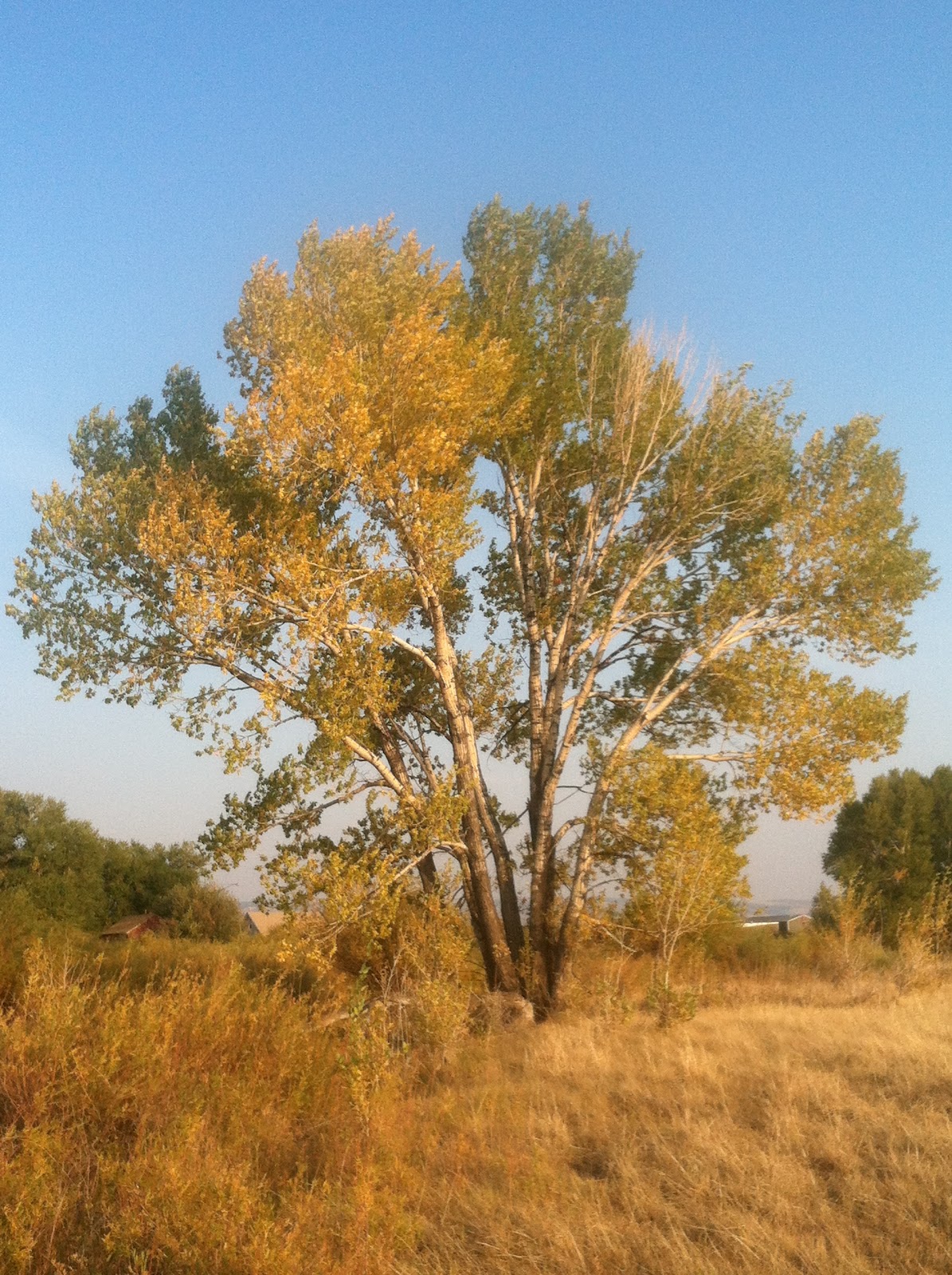
In areas like this area which truly have a defined Autumn, it truly is a beautiful time of year. The grasses turn golden, the leaves bright yellow, the sky is a pale blue, with wispy clouds, the sunsets are reds and yellows, not the blues and purples of earlier in the year, the waters of the lakes and rivers are dark and secretive, the dust grey and dry. There is a chill in the air that comes and goes, summer still hanging on stubbornly, winter sleepy but stirring. The nights are cold but the days aren't too chilly yet. Sweat shirts and sweaters come out, though not worn constantly. Everyone and everything can feel the Change in the air, the Year turning, Autumn approaching Winter. The Scales stand balanced but begin to tip toward Night, toward Nyx, toward Nox. They begin to tip toward Winter.
You will recall the Horned Child born at Lugh's Feast. The Winged Serpent grows old as Winter approaches, but the Horned Child grows stronger. The Scales are balanced, The Horned Child increasing as Winter comes, the Winged Serpent growing weaker as Summer fades. The Queen also ages, but she is not weaker. Her white dress gives way to sable black robes, her black Night Veil runs red with Blood. She who married the Winged Serpent as the Spinner and gave birth to the Horned Child as the Weaver has now become the Cutter. And the stage is set for Samhain once more.
As you move further north in Europe, or in North America, harvest shift back toward the Solstice. Further south, they shift the over way. Planting shifts toward the same point, planting and harvest approaching each other. In the far north, Planting is around May Day and harvest is around the Summer Solstice. In the south, there are even winter crops. The two points vary as you move north. South of the Summer Solstice Harvest, but north of the Mediterranean. Often three harvests are discussed, that of Lugh's Feast, that of the Autumn Solstice, and that of Samhain.
In Laramie where I live, there is only one crop worth growing, one harvest a year. Hay grows well and will feed the cattle through the long winter if the weather cooperates. Though none of the Knots or Tides are commonly celebrated, they do roughly correspond to our growing season. Typically, planting occurs between May Day and the Summer Solstice. Typically harvest is between Lugh's Day and the Autumn Equinox. Planting has to be done after the last major freeze but before the rain comes. Harvest occurs after the rain stops, but also after the hay has time to dry in the heat following the rain, but before the first major freeze. This leaves a precarious balance. If the cold lasts too late of the rains come too soon, the hay planted has little chance. If the rain comes too late or ends too soon, the hay won't grow. If the rain lasts too long or the heat doesn't last long enough, the hay doesn't dry and if it can be harvested at all, it risks rot. If the snow comes too soon, time runs out to finish harvest.
This year was an odd year. Instead of May, Spring came in March, way too early. This meant the water from the runoff, used for irrigation, peaked in May instead of July. March is too early to plant, and the rain came too early, lid April instead of late May, and ended too early as well, early June instead of mid July. The heat came early, mid June instead of early August. The fields were dry enough for harvest in early August, way too early. The hay grew about six inches this year instead of about two feet normally. The ranchers didn't have much to harvest, and grazing began to fade early as well, so the need for hay came early. Hay prices have soared, but there is not enough supply for the demand no matter how much it costs. A very bad thing heading into what appears will be an early winter.
We are approaching the full moon of the third moon of Autumn, when we should be in the second moon. The first moon of Autumn was the Yarrow Moon, and the second was the Sagebrush Moon. I'm unsure what name to give this current one. Candidates currently are the Moon of Yellow Leaves, the Yellow Moon, the Dust Moon, the Cooling Moon, the Harvest Moon, and the Blood Moon.
The Autumn Equinox is a very obvious crossroads. It stands at the midpoint between Midsummer and Midwinter, between the Summer Solstice and Winter Solstice. The name Equinox is of course Aequus Nox, Equal Night. From a astronomical point of view, it is the point where the sun rises at about six in the morning and sets at about six in the evening, with a twelve hour day and a twelve hour night. It is the midpoint in the progression of day/night, with the longest day at the Summer Solstice and the longest night at the Winter Solstice. The equinox is half way between, with the decreasing days and increasing nights passing each other as they swing the other way.
What's interesting is that the cross quarters (Beltane/May Day, Lugh's Day, Samhain, Candlemas/Bride's Day) and the Solstices were common times for festivals and feasts, yet the equinoxes seldom were. They are easier to observe for the common person without instruments or charts than any other, yet they are seldom observed. But, then, the cross quarters were marked by the rising of certain stars, they were stellar in nature. The Solstices are when the sun enters Cancer and Capricorn, and the Equinoxes are when the sun enters Aries and Libra. They are solar but marked by stellar times. The importance of the Solstices seem obvious. The sun begins dying with the Summer Solstice, and coming back alive with the Winter Solstice. But what purpose would the Equinoxes actually hold? It would depend on the area, more than likely. Some areas would indeed have planted and harvested at the equinoxes, but mostly they are a sign of the approach of Beltane and Samhain.
Looking at the Zodiac, the Autumn Equinox marks the sun moving from Virgo into Libra, from the Virgin to the Scales. Virgo marks the end of growing in many cultures. She is the Corn Maiden, the Wheat Maiden. The brightest star is Spica, Spica Virginis, the Maiden's Ear of Grain. Spica is the fruit the Maiden brings. Libra, though, the Scales, is judgment and endings. It is Ma'at weighing the human heart against a feather. It is accounts settled after the harvest is brought it. Libra is the sign of cutting, the Cutter to Virgo's Spinner. Balanced scales of course are appropriate to the Autumn Equinox, a point of balance between night and day.
In areas like this area which truly have a defined Autumn, it truly is a beautiful time of year. The grasses turn golden, the leaves bright yellow, the sky is a pale blue, with wispy clouds, the sunsets are reds and yellows, not the blues and purples of earlier in the year, the waters of the lakes and rivers are dark and secretive, the dust grey and dry. There is a chill in the air that comes and goes, summer still hanging on stubbornly, winter sleepy but stirring. The nights are cold but the days aren't too chilly yet. Sweat shirts and sweaters come out, though not worn constantly. Everyone and everything can feel the Change in the air, the Year turning, Autumn approaching Winter. The Scales stand balanced but begin to tip toward Night, toward Nyx, toward Nox. They begin to tip toward Winter.
You will recall the Horned Child born at Lugh's Feast. The Winged Serpent grows old as Winter approaches, but the Horned Child grows stronger. The Scales are balanced, The Horned Child increasing as Winter comes, the Winged Serpent growing weaker as Summer fades. The Queen also ages, but she is not weaker. Her white dress gives way to sable black robes, her black Night Veil runs red with Blood. She who married the Winged Serpent as the Spinner and gave birth to the Horned Child as the Weaver has now become the Cutter. And the stage is set for Samhain once more.
FFF,
~Muninn's Kiss
Labels:
autumn,
autumn equinox,
autumnequinox,
change,
cycle,
equinox,
grimr,
grimr_org,
horned child,
knots,
libra,
queen,
three mothers,
virgo,
winged serpent,
year
Monday, 9 April 2012
On Easter and the Fertility of Aspens
![]() |
| Ostara by Johannes Gehrts, 1884 |
Most people know (or should know) that modern Easter is a celebration of fertility and spring in Europe, joined with the death and protection of Pesakh (Passover) of the Jews, and the resurrection of Jesus of the Christians. There's some common threads there, if you look carefully. Death and Rebirth.
![]() |
| The Resurrection of Christ by Carl Bloch, 1890 |
![]() |
| A depiction of the blood on the door posts. Artist unknown. |
From a Witch point of view, these symbols and connections are important. If we look back, we have the Sacrifice of the God on Samhain, the Old Year, the Darkling Twin, he passes through the Gates of Death into the Underworld, the Otherworld. His journey ends at the Winter Solstice, he settles in. The old year is dead with him, Autumn gives way to Winter, as his coils curl up around it and he sleeps. The sun is reborn, a premonition of his return.
At Imbolc, his Bride calls for him and he awakens, uncoils, and prepares for a new journey, swimming up across the Veil through the Well of Worlds, seeking Her, who he died for and will now be reborn for, the New Year, the Bright Twin.
On Imbolc, Spring begins, though it's slow in awaken in Wyoming, often not realized until May or June. By the calendar, Summer will begin on the first of May, but these are tides, not calendars, and May 1 is a convenient date, but the tide falls where it will. The Spring Equinox marks the approximate middle of the Spring Tide. Passover begins on the 15th day of Nisan. As I've discussed before, the Hebrew calendar is Lunar. Each month begins when the moon becomes dark. The 15th of each month lands on the full moon, or close to it, the mid point of the month. The 15th of Nisan is always the first full moon after the Spring Equinox, so it's a lunar event timed to the solar mid point of Spring. We're in the middle of Passover at the moment, so the Christian Easter landed on its old determination this year. Essentially, Passover (which originally determined Easter, Good Friday being the first Friday after the beginning of Passover, until changes in calendars messed it all up) is point of importance between Imbolc and Beltaine.
![]() |
| Cernunnos (La Tène) / 'ernunno on the Gundestrup Cauldron |
Spring, be it Imbolc and Candlemas, be it the Spring Equinox and Passover and Easter, be it May Day and Beltaine, is a time of rebirth. It's Himself reborn, the Sacrificial Mortal God, but also the rebirth of the earth, of the land.
Over the last few weeks, I've been watching the aspen trees wake up. I work during the week and have an aspen right out side my window.
| Aspen tree beginning to bud, April 2, 2012 |
| The same aspen tree with larger buds, April 5, 2012 |
| The same aspen tree, now with male catkins, April 9, 2012 |
I've never really had a chance to observe the cycles of aspen before this, I haven't looked closely at them over an extended period. But with a tree just outside my window at work, I get to see it, with all its changes, every work day. Very interesting to observe. I'd love to figure out a way to observe the willows and lodge pole pines in the same manner.
From what I read, male catkins droop, and female catkins are erect (make what metaphors you want with that). The male ones produce pollen, and if fertilized, the female ones produce tiny seeds. But reproducing that way is actually fairly rare. Each tree is either male of female, and most groves are basically one tree, reproducing via runners that form an exact natural clone, so essentially, each grove is either male or female. Logically, this means that a male grove with always remain male only unless it grows far enough to combine with a female grove, whereas if the catkins in a female grove get fertalized, potentially it could contain both male and female aspens. I really wish the mountain roads were open this time of year, so I could go up and look as several groves and find out which ones were male and which were female and find out if there was a different "feel", a different "energy". But you can only determine the sex when the trees are in bloom, which is around this time, and the roads don't typically open until Memorial Day, which is May 28th this year (last year, they couldn't get the roads clear for Memorial Day for the first time in like 30 years, because the snow was eight feet deep and kept blowing back full every night, so they couldn't make progress; the roads opened in July).
Which brings us back to fertility and rebirth. The Aspens awake first, not with leaves to harness the sunlight, but with flowers, the catkins, to reproduce. They awake in fertility, in Sex, the essence of Creation. As should we all.
FFF,
~Muninn's Kiss
Labels:
aspens,
christianity,
death,
divinetwins,
easter,
equinox,
fertility,
holidays,
judaism,
life,
passover,
rebirth,
spring,
trees,
witchcraft
Sunday, 25 September 2011
Autumn Equinox: A Time to Remember...
The most significant dates in the solar year are the Winter Solstice and the Summer Solstice, the longest night and the longest day. These are significant because they are the points where the sun is nearest to one of the poles and furthest from the other. The Winter Solstice marks the end of shortening days and begins the lengthening of days, and the Summer Solstice the opposite. But half way between these days are two other significant days. The Spring and Autumn Equinoxes mark the point where the sun passes the equator as it moves from one pole to the other. The Solstices are liminal because they are transitions between the growing days that the shrinking days, the shrinking nights and the growing nights. The Equinoxes are liminal because they are the transitions between the sun in the north and the sun in the south. All liminal times and places are of importance and can't be ignored.
Yesterday marked the Autumn Equinox, half way between the Summer and Winter Solstices, the sun crossing from the northern hemisphere to the southern. It is considered the transition from Summer to Autumn. In astrological terms, the Equinox marks the sun moving from Virgo into Libra, the Virgin to the Scales. The Coptic word for the constellation of Libra was Lambadia meaning "station of propitiation". In Arabic, it's Al Zubena, meaning "redemption" or "purchase". Around this time of year (from sunset of the 29th to sunset of the 30th) is Rosh Hashana in the Jewish religious calendar. Rosh Hashana means "head of the year" and is the Jewish New Year. In the Tanakh, it is often called Yom Ha-Zikkaron, the Day of Rememberance, because it's a day of looking back at the past year. One tradition is Tashlikh meaning "casting off", in which you walk to the nearest moving water and empty your pockets into it, symbolizing casting off your sins from the year before. Which fits well with the Coptic and Arabic words for the constellation of Libra.
An obvious image that comes to mind is Ma'at in Egyptian mythology weighing the heart of the dead against the weight of a feather. Ma'at is the goddess of law and morality, whose justice is extreme and unbending, but she also regulates the movements of the stars, the changing of the seasons, the actions of all mortals and gods, and is the Order that brought the cycles and constants of creation out of the chaos that came before. In Genesis, the is the bohu that is order in the tohu, the Chaos. Ma'at can be seen as Ananke, the three-headed serpentine goddess of Necessity, Fate, and Destiny, the twisting of her and her mate Chronos, Time, their coils twisting around each other, causing the turning of the stars and seasons, and the actions of mortals and gods. Just as the Egyptian gods are bound by Ma'at, the Greek gods are bound by Ananke and her daughters, the Fates, and the Norse gods are bound by the Norns.
Here begins Autumn, and the march toward Winter, the time of the Ana and the Arddhu in Feri, of Wisdom and the elder years of life as he head toward the death of Winter. This time of year is a time of balance, redemption, forgiveness, and Fate. It is a time to remember Her, "Old Fate, the major deity of all true witches."
FFF,
~Muninn's Kiss
Yesterday marked the Autumn Equinox, half way between the Summer and Winter Solstices, the sun crossing from the northern hemisphere to the southern. It is considered the transition from Summer to Autumn. In astrological terms, the Equinox marks the sun moving from Virgo into Libra, the Virgin to the Scales. The Coptic word for the constellation of Libra was Lambadia meaning "station of propitiation". In Arabic, it's Al Zubena, meaning "redemption" or "purchase". Around this time of year (from sunset of the 29th to sunset of the 30th) is Rosh Hashana in the Jewish religious calendar. Rosh Hashana means "head of the year" and is the Jewish New Year. In the Tanakh, it is often called Yom Ha-Zikkaron, the Day of Rememberance, because it's a day of looking back at the past year. One tradition is Tashlikh meaning "casting off", in which you walk to the nearest moving water and empty your pockets into it, symbolizing casting off your sins from the year before. Which fits well with the Coptic and Arabic words for the constellation of Libra.
An obvious image that comes to mind is Ma'at in Egyptian mythology weighing the heart of the dead against the weight of a feather. Ma'at is the goddess of law and morality, whose justice is extreme and unbending, but she also regulates the movements of the stars, the changing of the seasons, the actions of all mortals and gods, and is the Order that brought the cycles and constants of creation out of the chaos that came before. In Genesis, the is the bohu that is order in the tohu, the Chaos. Ma'at can be seen as Ananke, the three-headed serpentine goddess of Necessity, Fate, and Destiny, the twisting of her and her mate Chronos, Time, their coils twisting around each other, causing the turning of the stars and seasons, and the actions of mortals and gods. Just as the Egyptian gods are bound by Ma'at, the Greek gods are bound by Ananke and her daughters, the Fates, and the Norse gods are bound by the Norns.
Here begins Autumn, and the march toward Winter, the time of the Ana and the Arddhu in Feri, of Wisdom and the elder years of life as he head toward the death of Winter. This time of year is a time of balance, redemption, forgiveness, and Fate. It is a time to remember Her, "Old Fate, the major deity of all true witches."
FFF,
~Muninn's Kiss
Labels:
ananke,
autumn,
bohu,
chaos,
chronos,
equinox,
fallen angels,
fate,
forgiveness,
holidays,
judgement,
maat,
order,
rememberence,
seasons,
tohu
Subscribe to:
Posts (Atom)