Showing posts with label poetry. Show all posts
Showing posts with label poetry. Show all posts
Friday, 24 May 2013
Morte D'Arthur
The Epic
By Alfred Lord Tennyson
At Francis Allen's on the Christmas eve,--
The game of forfeits done--the girls all kissed
Beneath the sacred bush and past away,--
The parson Holmes, the poet Everard Hall,
The host, and I sat round the wassail-bowl,
Then half-way ebbed: and there we held a talk,
How all the old honor had from Christmas gone,
Or gone, or dwindled down to some odd games
In some odd nooks like this; till I, tired out
With cutting eights that day upon the pond,
Where, three times slipping from the outer edge,
I bumped the ice into three several stars,
Fell in a doze; and, half-awake, I heard
The parson taking wide and wider sweeps,
Now harping on the church-commissioners,
Now hawking at geology and schism;
Until I woke, and found him settled down
Upon the general decay of faith
Right through the world; "at home was little left,
And none abroad; there was no anchor, none,
To hold by." Francis, laughing, clapt his hand
On Everard's shoulder with, "I hold by him."
"And I," quoth Everard, "by the wassail-bowl."
"Why, yes," I said, "we knew your gift that way
At college; but another which you had,
I mean of verse (for so we held it then),
What came of that?" "You know," said Frank, "he burnt
His epic, his King Arthur, some twelve books,"--
And then to me demanding why? "Oh, sir,
He thought that nothing new was said, or else
Something so said 'twas nothing--that a truth
Looks freshest in the fashion of the day:
God knows, he has a mint of reasons: ask.
It pleased _me_ well enough." "Nay, nay," said Hall,
"Why take the style of those heroic times?
For nature brings not back the mastodon,
Nor we those times; and why should any man
Remodel models? These twelve books of mine
Were faint Homeric echoes, nothing-worth,
Mere chaff and draff, much better burnt." "But I,"
Said Francis, "picked the eleventh from this hearth,
And have it: keep a thing, its use will come.
I hoard it as a sugar-plum for Holmes."
He laughed, and I, though sleepy, like a horse
That hears the corn-bin open, pricked my ears;
For I remembered Everard's college fame
When we were freshmen: then, at my request,
He brought it; and the poet, little urged,
But, with some prelude of disparagement,
Read, mouthing out his hollow oes and aes,
Deep-chested music, and to this result:
Morte D'Arthur
So all day long the noise of battle roll'd
Among the mountains by the winter sea;
Until King Arthur's table, man by man,
Had fallen in Lyonnesse about their Lord,
King Arthur: then, because his wound was deep,
The bold Sir Bedivere uplifted him,
Sir Bedivere, the last of all his knights,
And bore him to a chapel nigh the field,
A broken chancel with a broken cross,
That stood on a dark strait of barren land.
On one side lay the ocean, and on one
Lay a great water, and the moon was full.
Then spake King Arthur to Sir Bedivere:
"The sequel of to-day unsolders all
The goodliest fellowship of famous knights
Whereof this world holds record. Such a sleep
They sleep--the men I loved. I think that we
Shall never more, at any future time,
Delight our souls with talk of knightly deeds,
Walking about the gardens and the halls
Of Camelot, as in the days that were.
I perish by this people which I made,--
Tho' Merlin sware that I should come again
To rule once more--but let what will be, be,
I am so deeply smitten thro' the helm
That without help I cannot last till morn.
Thou therefore take my brand Excalibur,
Which was my pride: for thou rememberest how
In those old days, one summer noon, an arm
Rose up from out the bosom of the lake,
Clothed in white samite, mystic, wonderful,
Holding the sword--and how I row'd across
And took it, and have worn it, like a king:
And, wheresoever I am sung or told
In aftertime, this also shall be known:
But now delay not: take Excalibur,
And fling him far into the middle mere:
Watch what thou seëst, and lightly bring me word."
To him replied the bold Sir Bedivere:
"It is not meet, Sir King, to leave thee thus,
Aidless, alone, and smitten thro' the helm.
A little thing may harm a wounded man.
Yet I thy hest will all perform at full,
Watch what I see, and lightly bring thee word."
So saying, from the ruin'd shrine he stept
And in the moon athwart the place of tombs,
Where lay the mighty bones of ancient men,
Old knights, and over them the sea-wind sang
Shrill, chill, with flakes of foam. He, stepping down
By zigzag paths, and juts of pointed rock,
Came on the shining levels of the lake.
There drew he forth the brand Excalibur,
And o'er him, drawing it, the winter moon,
Brightening the skirts of a long cloud, ran forth
And sparkled keen with frost against the hilt:
For all the haft twinkled with diamond sparks,
Myriads of topaz-lights, and jacinth work
Of subtlest jewellery. He gazed so long
That both his eyes were dazzled, as he stood,
This way and that dividing the swift mind,
In act to throw: but at the last it seem'd
Better to leave Excalibur conceal'd
There in the many-knotted water-flags,
That whistled stiff and dry about the marge.
So strode he back slow to the wounded King.
Then spake King Arthur to Sir Bedivere:
"Hast thou perform'd my mission which I gave?
What is it thou hast seen, or what hast heard?"
And answer made the bold Sir Bedivere:
"I heard the ripple washing in the reeds,
And the wild water lapping on the crag."
To whom replied King Arthur, faint and pale:
"Thou hast betray'd thy nature and thy name,
Not rendering true answer, as beseem'd
Thy fealty, nor like a noble knight:
For surer sign had follow'd, either hand,
Or voice, or else a motion of the mere.
This is a shameful thing for men to lie.
Yet now, I charge thee, quickly go again
As thou art lief and dear, and do the thing
I bade thee, watch, and lightly bring me word."
Then went Sir Bedivere the second time
Across the ridge, and paced beside the mere,
Counting the dewy pebbles, fixed in thought;
But when he saw the wonder of the hilt,
How curiously and strangely chased, he smote
His palms together, and he cried aloud,
"And if indeed I cast the brand away,
Surely a precious thing, one worthy note,
Should thus be lost forever from the earth,
Which might have pleased the eyes of many men.
What good should follow this, if this were done?
What harm, undone? deep harm to disobey,
Seeing obedience is the bond of rule.
Were it well to obey then, if a king demand
An act unprofitable, against himself?
The King is sick, and knows not what he does.
What record, or what relic of my lord
Should be to aftertime, but empty breath
And rumours of a doubt? but were this kept,
Stored in some treasure-house of mighty kings,
Some one might show it at a joust of arms,
Saying, 'King Arthur's sword, Excalibur,
Wrought by the lonely maiden of the Lake;
Nine years she wrought it, sitting in the deeps
Upon the hidden bases of the hills.'
So might some old man speak in the aftertime
To all the people, winning reverence.
But now much honour and much fame were lost."
So spake he, clouded with his own conceit,
And hid Excalibur the second time,
And so strode back slow to the wounded King.
Then spoke King Arthur, breathing heavily:
"What is it thou hast seen, or what hast heard?"
And answer made the bold Sir Bedivere:
"I heard the water lapping on the crag,
And the long ripple washing in the reeds."
To whom replied King Arthur, much in wrath:
"Ah, miserable and unkind, untrue,
Unknightly, traitor-hearted! Woe is me!
Authority forgets a dying king,
Laid widow'd of the power in his eye
That bow'd the will. I see thee what thou art,
For thou, the latest-left of all my knights,
In whom should meet the offices of all,
Thou wouldst betray me for the precious hilt;
Either from lust of gold, or like a girl
Valuing the giddy pleasure of the eyes.
Yet, for a man may fail in duty twice,
And the third time may prosper, get thee hence:
But, if thou spare to fling Excalibur,
I will arise and slay thee with my hands."
Then quickly rose Sir Bedivere, and ran,
And, leaping down the ridges lightly, plunged
Among the bulrush-beds, and clutch'd the sword,
And strongly wheel'd and threw it. The great brand
Made lightnings in the splendour of the moon,
And flashing round and round, and whirl'd in an arch,
Shot like a streamer of the northern morn,
Seen where the moving isles of winter shock
By night, with noises of the northern sea.
So flash'd and fell the brand Excalibur:
But ere he dipt the surface, rose an arm
Clothed in white samite, mystic, wonderful,
And caught him by the hilt, and brandish'd him
Three times, and drew him under in the mere.
And lightly went the other to the King.
Then spoke King Arthur, drawing thicker breath:
"Now see I by thine eyes that this is done.
Speak out: what is it thou hast heard, or seen?"
And answer made the bold Sir Bedivere:
"Sir King, I closed mine eyelids, lest the gems
Should blind my purpose, for I never saw,
Nor shall see, here or elsewhere, till I die,
Not tho' I live three lives of mortal men,
So great a miracle as yonder hilt.
Then with both hands I flung him, wheeling him;
But when I look'd again, behold an arm,
Clothed in white samite, mystic, wonderful,
That caught him by the hilt, and brandish'd him
Three times, and drew him under in the mere."
And answer made King Arthur, breathing hard:
"My end draws nigh; 't is time that I were gone.
Make broad thy shoulders to receive my weight,
And bear me to the margin; yet I fear
My wound hath taken cold, and I shall die."
So saying, from the pavement he half rose,
Slowly, with pain, reclining on his arm,
And looking wistfully with wide blue eyes
As in a picture. Him Sir Bedivere
Remorsefully regarded thro' his tears,
And would have spoken, but he found not words,
Then took with care, and kneeling on one knee,
O'er both his shoulders drew the languid hands,
And rising bore him thro' the place of tombs.
But, as he walk'd, King Arthur panted hard,
Like one that feels a nightmare on his bed
When all the house is mute. So sigh'd the King
Muttering and murmuring at his ear, "Quick, quick!
I fear it is too late, and I shall die."
But the other swiftly strode from ridge to ridge,
Clothed with his breath, and looking, as he walk'd
Larger than human on the frozen hills.
He heard the deep behind him, and a cry
Before. His own thought drove him like a goad.
Dry clash'd his harness in the icy caves
And barren chasms, and all to left and right
The bare black cliff clang'd round him, as he based
His feet on juts of slippery crag that rang
Sharp-smitten with the dint of armed heels--
And on a sudden, lo! the level lake,
And the long glories of the winter moon.
Then saw they how there hove a dusky barge
Dark as a funeral scarf from stem to stern,
Beneath them; and descending they were ware
That all the decks were dense with stately forms
Black-stoled, black-hooded, like a dream--by these
Three Queens with crowns of gold--and from them rose
A cry that shiver'd to the tingling stars,
And, as it were one voice, an agony
Of lamentation, like a wind, that shrills
All night in a waste land, where no one comes,
Or hath come, since the making of the world.
Then murmur'd Arthur, "Place me in the barge,"
And to the barge they came. There those three Queens
Put forth their hands, and took the King, and wept.
But she that rose the tallest of them all
And fairest, laid his head upon her lap,
And loosed the shatter'd casque, and chafed his hands,
And call'd him by his name, complaining loud
And dropping bitter tears against his brow
Striped with dark blood: for all his face was white
And colourless, and like the wither'd moon
Smote by the fresh beam of the springing east;
And all his greaves and cuisses dash'd with drops
Of onset; and the light and lustrous curls--
That made his forehead like a rising sun
High from the daïs-throne--were parch'd with dust;
Or, clotted into points and hanging loose,
Mix'd with the knightly growth that fringed his lips.
So like a shatter'd column lay the King;
Not like that Arthur who, with lance in rest,
From spur to plume a star of tournament,
Shot thro' the lists at Camelot, and charged
Before the eyes of ladies and of kings.
Then loudly cried the bold Sir Bedivere:
"Ah! my Lord Arthur, whither shall I go?
Where shall I hide my forehead and my eyes?
For now I see the true old times are dead,
When every morning brought a noble chance,
And every chance brought out a noble knight.
Such times have been not since the light that led
The holy Elders with the gift of myrrh.
But now the whole ROUND TABLE is dissolved
Which was an image of the mighty world;
And I, the last, go forth companionless,
And the days darken round me, and the years,
Among new men, strange faces, other minds."
And slowly answer'd Arthur from the barge:
"The old order changeth, yielding place to new,
And God fulfils Himself in many ways,
Lest one good custom should corrupt the world.
Comfort thyself: what comfort is in me?
I have lived my life, and that which I have done
May He within Himself make pure! but thou,
If thou shouldst never see my face again,
Pray for my soul. More things are wrought by prayer
Than this world dreams of. Wherefore, let thy voice
Rise like a fountain for me night and day.
For what are men better than sheep or goats
That nourish a blind life within the brain,
If, knowing God, they lift not hands of prayer
Both for themselves and those who call them friend?
For so the whole round earth is every way
Bound by gold chains about the feet of God.
But now farewell. I am going a long way
With these thou seëst--if indeed I go--
(For all my mind is clouded with a doubt)
To the island-valley of Avilion;
Where falls not hail, or rain, or any snow,
Nor ever wind blows loudly; but it lies
Deep-meadow'd, happy, fair with orchard-lawns
And bowery hollows crown'd with summer sea,
Where I will heal me of my grievous wound."
So said he, and the barge with oar and sail
Moved from the brink, like some full-breasted swan
That, fluting a wild carol ere her death,
Ruffles her pure cold plume, and takes the flood
With swarthy webs. Long stood Sir Bedivere
Revolving many memories, till the hull
Look'd one black dot against the verge of dawn,
And on the mere the wailing died away.
Here ended Hall, and our last light, that long
Had winked, and threatened darkness, flared and fell:
At which the Parson, sent to sleep with sound,
And waked with silence, grunted "Good!" but we
Sat rapt: it was the tone with which he read--
Perhaps some modern touches here and there
Redeemed it from the charge of nothingness--
Or else we loved the man, and prized his work;
I know not; but we sitting as I said,
The cock crew loud; as at that time of year
The lusty bird takes every hour for dawn:
Then Francis, muttering, like a man ill-used,
"There now--that's nothing!" drew a little back,
And drove his heel into the smouldered log,
That sent a blast of sparkles up the flue:
And so to bed; where yet in sleep I seemed
To sail with Arthur under looming shores,
Point after point; till on to dawn, when dreams
Begin to feel the truth and stir of day,
To me, methought, who waited with a crowd,
Then came a bark that, blowing forward, bore
King Arthur, like a modern gentleman
Of stateliest port; and all the people cried,
"Arthur is come again: he cannot die."
Then those that stood upon the hills behind
Repeated "Come again, and thrice as fair;"
And, further inland, voices echoed, "Come
With all good things, and war shall be no more."
At this a hundred bells began to peal,
That with the sound I woke, and heard indeed
The clear church-bells ring in the Christmas morn.


Tuesday, 1 January 2013
2012 Myth Cycle: Year in Review
יד וַיֹּאמֶר אֱלֹהִים יְהִי מְאֹרֹת בִּרְקִיעַ הַשָּׁמַיִם לְהַבְדִּיל בֵּין הַיּוֹם וּבֵין הַלָּיְלָה וְהָיוּ לְאֹתֹת וּלְמוֹעֲדִים וּלְיָמִים וְשָׁנִיםטו וְהָיוּ לִמְאוֹרֹת בִּרְקִיעַ הַשָּׁמַיִם לְהָאִיר עַל-הָאָרֶץ וַיְהִי-כֵן
14 And God said: 'Let there be lights in the firmament of the heaven to divide the day from the night; and let them be for signs, and for seasons, and for days and years;
15 and let them be for lights in the firmament of the heaven to give light upon the earth.' And it was so.
The year passes, day by day, week by week, month by month. Tides come in, tides go out. Moons move to full and back to dark. Time passes.
According to the current Gregorian Calendar, today is the first of the year, but as I've said many times, different cultures each have their own new year. This year, the Chinese New Year lands on February 10th. Depending on the purpose, September 4th, January 25th, or March 12th can be considered the beginning of the new year this coming year in the Jewish calendar. In the Islamic calendar, it begins November 3rd this coming year. Some cultures begin the year on Samhain or Beltaine, or on one of the Equinoxes or Solstices. We celebrate it on January 1st in most of the Western world because of the use of the Gregorian calendar which is based on the Julian calendar, since January 1st, the Feast of Janus, was the Roman new year. It should be noted that January 1st is the 8th day from Christmas (including both end points), so is seen as the day Christ was circumcised based on a December 25th birth. However, Christmas was likely originally a Solstice celebration, December 25th being the original date given to the Solstice, before shifting moved it roughly four days back. This would make January 1st, the Feast of Janus, the eighth day from the Solstice, so properly December 28th or 29th depending on the day. We still celebrate the Feast of Janus, if you look carefully. Janus is the two faced god, one looking back, the other forward, just as we do, celebrating what happened in the last year and making resolutions for the coming year.
Much of the pagan and occult community celebrates the eight (or nine) Knots of the year, the eight Fire Festivals, or whatever name each uses, sometimes poetically called the Wheel of the Year. These are Bride's Day/Candlemas/Imbolc, the Spring Equinox/Ostara, May Day/Roodmas/Beltane, the Summer Solstice/Midsummer/Feast of John the Baptist/Litha, Lugh's Day/Lughnasadh/Lammas/August Eve/Feast of Augustus/Feast of Sofia, the Autumn Equinox/Michaelmas/Mabon, All Saint's Day/All Soul's Day/Hallowe'en/Samhain, and the Winter Solstice/Midwinter/Chistmas/Yule.
I don't always celebrate these, but I note their passing, or, more accurately, the passing of their Tides, as these are the high tides of energy cycles throughout the year. The Tides don't always fall on those specific days. This is because those days are pinpointed by the solar year, the solstices being the most northern and most southern movements of the sun through the sky or the shortest and longest day or night, the equinoxes being the days when day and night are equal in length, and the other four the midpoints between. But the Tides are not solar, and they aren't lunar. If they were solar, the cross-quarters (Bride's Day, Beltaine, Lugh's Day, and Samhain) would have no significance. If they were lunar, there would be thirteen, not eight. Even the months, despite the origin of the name, aren't lunar in Western calendars, for there are roughly 13 moons, but only twelve months, and originally only ten (you'll note the names January, Janus, February, Februum, March, Mars, April, Aperire, May, Maia, June, Juno, September, Seven, October, Eight, November, Nine, and December, Ten). Neither twelve nor ten fit the moons. But twelve does fit the Zodiac, which is of course stellar, not solar or lunar. Libra was added late, with 11 constellations in the Zodiac before that, maybe ten previously at some point. You'll also notice that the moon occults Aldebaran around the Autumn Equinox in the Southern Hemisphere. Aldebaran is the brightest star in Taurus, the Bull, and becomes visible in the Northern Hemisphere around Samhain, sinking again around Beltaine, being highest around Bride's Day. Regulus is often occulted by the moon around the Summer Solstice. Regulus is the brightest star in Leo, the Lion, and becomes most visible in the Northern Hemisphere around Bride's Day, and disappears around Lugh's Day, being highest around Beltaine. Antares can be occulted by the moon during any month. It is the brightest star in Scorpio, the Scorpion, and is roughly visible from around the spring equinox to the autumn equinox, highest closest to the summer solstice. There are other stars that point to various other of the eight Knots, but I'll leave that for a later post.
I note the passing of the Tides, and often how the solar cycles, lunar cycles, and stellar cycles land, sometimes celebrating or doing a working, sometimes just noting them. But in noting them, I often find poetry and myth can capture the essence of the Tides.
The following are my ritual poems for the major Tides over the last year, from Samhain to Samhain, showing a cycle I saw grow up throughout the year. Each poem fed the next and the next, creating a myth cycle. The dates given are the most common modern dates, or there about. Each actually spreads over three days, but the Tides of each grow before that date and fade after, and reach High Tide at different times in different places, and are also influenced by the shorter Tides of the moon and longer Tides of the sun, so the dates given are for reference only, to make the cycle more clear. The names of the Tides given are not necessarily the names everyone uses, but the ones I most commonly use in my practice.
(The Year Draws Nigh - Samhain 10/31/2011)
As darkness fall, the veil thin,
The year is drawing nigh.
Shadows lengthen, gather strength,
The year is drawing nigh.
The dead they stir, and look around,
The year is drawing nigh.
Tonight they walk, tonight they dine,
The year is drawing nigh.
The sinks down, she’s dying now,
The year is drawing nigh.
Beneath the hills, the dying sun,
The year is drawing nigh.
Hollow hills, they open wide,
The year is drawing nigh.
Faerie folk, the mighty dead,
The year is drawing nigh.
Samhain’s fires, burning bright,
The year is drawing nigh.
To dance around, in death’s embrace,
The year is drawing nigh.
Ancestors dead, some long gone,
The year is drawing nigh.
We tip a glass, we place a plate,
The year is drawing nigh.
Death stands up, tonight he reigns,
The year is drawing nigh.
In darkness strong, the dying year,
The year is drawing nigh.
The revelers grow deathly quiet,
The year is drawing nigh.
All knees bend and all tongue stilled,
The year is drawing nigh.
For Death takes all and all will come,
The year is drawing nigh.
The Gates of Death, they open wide,
The year is drawing nigh.
His face you meet, at Death’s great doors,
The year is drawing nigh.
A friend, a judge, a lover, a blade,
The year is drawing nigh.
His embrace is sweet, but deathly cold,
The year is drawing nigh.
In love he strips you, bone from bone,
The year is drawing nigh.
Nothing left, you pass beyond,
The year is drawing nigh.
The veil it parts, the doors swing wide,
The year is drawing nigh.
Your last strong breath, last orgasm,
The year is drawing nigh.
And through you go, to what’s beyond,
The year is drawing nigh.
But Death’s great doors and Life’s fair doors,
The year is drawing nigh.
What’s dead and gone, will be reborn,
The year is drawing nigh.
A new breath breathed, a new day dawns,
The year is drawing nigh.
Death to Life, he takes your hand,
The year is drawing nigh.
All is gone, but all in new,
The year is drawing nigh.
The new dawn’s sun, in the east,
The year is drawing nigh.
The cold it flees, the shadows hide,
The year is drawing nigh.
Dark Samhain’s night to new year’s light,
The year is drawing nigh.
What was dead has come again.
(The Throne of Bone - Winter Solstice 12/22/2011)
Darkest night and shortest day,
Shadows reign and darkness calls,
The shadowy figure of Death stands by,
Patiently waiting for all to fall.
Each child born will surly die,
None is spared and all know why,
At Death’s bone throne each one will come,
He needn’t search for all will come.
The sun sets earlier for half the year,
Night grows longer, shadows strive,
The year he ages as do all,
Growing weaker, growing frail.
The time draws near when he will die,
The year we’ve loved so hard to watch,
The mourners all do gather round,
For letting go is the hardest task.
With the sun, the year does set,
Sinking down into the grave,
Like each man, he bows his knee,
And presents himself at the throne of bone.
In his birth we knew he’d die,
For every beginning contains the end,
We watched him grow like a new born lamb,
We watch him die at the Slaughterer’s hand.
Every beginning has it’s end,
But every ending is born again,
With Dawn’s first light like the Morning Star,
The new year rises and live once more.
Fresh and hopeful, full of life,
The year reborn begins his flight,
We watch him stretch and try his wings,
We glory that he lives again.
Forgetting the grief and sorrow past,
We pretend he didn’t see Death’s own face,
With the new year, we fly away,
Trying to forget our own mortality.
(The Call - Bride's Day 2/1/2012)
As the metal hare settles to sleep,
The water dragon stretches and stirs,
The world serpent around the world,
A curled serpent in a cave,
Slowly stirring, his coils spread,
In the underworld he's made his nest,
And waited through the coldest time,
Darkling serpent, shining snake,
His head he raises and starts to move,
Crawling forth on fair Bride's day,
Up the Well of Worlds he comes,
Across the Veil from world to world,
He hears the call of a thousand flames,
Candles lit and fires bright,
The heat, the light, it calls him forth,
Through deepest dark and waters cold,
Up he crawls, reborn from death,
Cthonic darkling, to worlds above,
Ravens dance the dance of death,
And flames the flicker, the spark of life,
The Bride she calls, the serpent comes,
Reborn and new, the strange Horned Child,
And a ring around the moon.
(Reborn from Down Below - Spring Equinox 3/20/2012)
Two months he swam,
Up through the well,
His scales flashing in the dark.
Twisting, turning,
Swimming, soaring,
Through the Veil of Worlds.
Into the light,
He pokes his head,
Sun flashing of his scales.
Reborn at least,
After Winter's grave,
Reborn from down below.
Two months ago,
He heard the call,
His Bride invoked his name.
And now he rises,
From the grave,
To live and love again.
Heat of sun,
In Spring's cold wind,
Coiled on a rock.
Prepare he does,
For May's fine feast,
And Marriage to his Bride.
(The Risen Lord and Laughing Queen - Beltaine 5/1/2012)
The wakened sleeper clothed in gold,
Warmed with Spring and rising sun,
Draped in green and newborn leaf,
Who once had died but rose again.
Golden scales and raven hair,
Skin of blue and feathers fair,
Who began a journey by candler's flame,
And rose in glory in first leaf's show.
In comes his Bride the fair Corn Maid,
Whose blackened veil now glowing white,
Grass stains on her small bare feet,
And bloodied sword upon her back.
The dancers dance and singers sing,
Risen lord and laughing queen,
The snow has melted and green grows strong,
Winter then Spring give way to sun.
Veil of white over golden hair,
A cotton dress with playful tears,
Small feet dance as if on air,
She laughs in joy at his peacock flair.
Round they spin just like the year,
Celebrating life and new found love,
Love reborn from past the grave,
Youth and Maiden, lust and joy.
The time has come to start again,
A marriage feast and strong bond hands,
New life, new love, all is born,
Eternal love, past Death's cold hand.
Around the pole the ribbons fly,
Dancing round in lustful fun,
In honor to the fair Corn Maid,
And Peacock Lord reborn again.
(From Blessed Womb and Serpent's Seed - Summer Solstice 6/20/2012)
Summer's heat has come again,
And with it a growing womb.
The union formed of May's young flowers,
Begins to start to show.
The risen lord's seed runs strong,
The laughing queen was ripe.
In summer's heat, her sweat is sweat,
The warmth that forms within.
She smiles sweetly in Solstice sun,
Spring's rain fades away.
The white veil gone, her golden hair,
Darkens to chestnut brown.
New moon's time, a darkened moon,
A bonfire burning high.
The dancers dance, round and round,
A fever burning high.
The Horned King sits close by her side,
His smile as big as hers.
The summer sun it rises bright,
Round like her growing womb.
The moon moves on and starts to grow,
Just like her unborn Child.
Summer's heat has come again,
And with it a growing womb.
The womb will grow to harvest time,
The Child that will be born.
From blessed womb and serpent's seed,
The Mother of all life.
(A Child of Blood - Lugh's Day 7/30/2012)
A child is born,
A child is given,
On the feast in fair Lugh's name.
A child of light,
A child of blood,
A Horned Child is given birth.
Well of the Womb,
Water and darkness,
Born into the bright light of day.
Shining fair,
A Hunter born,
Of starlight and mystic earth.
Hunter and hunted,
Herder and rancher,
An animal both wild and free.
Born for the sword,
Born for the bow,
Born to be the Winged Serpent's death.
A child is born,
A child is given,
On the feast in fair Lugh's name.
A child of light,
A child of blood,
A Horned Child is given birth.
(A Mortal Wound - Autumn Equinox 9/22/2012)
The Horned Child rises ever strong,
Like a mighty angel with a sword of steel,
He ventures forth in search of prey,
Looking for a Serpent with feathered wings,
He finds him then, near end of life,
The Winged Serpent weak, while the Child is strong,
He stalks his prey desiring the kill,
He takes his time for the hour is nigh,
In the early snow, he finds the trail,
The autumn's chill soon slows the snake,
The Child approached, so full of faith,
Of how this will end, of what's at stake,
He raises his sword and makes the blow,
A mortal wound that can't be healed,
But the time is short, and has not come,
The Wounded Serpent does get away,
The Child was wrong, the death wasn't sure,
But he trudges one, still on the trail.
(The Hunter's Lamb - Samhain 10/31/2012)
On a black altar on All Soul's Night,
The Wounded Serpent makes last call,
He will not go down without a fight,
But he knows not enough will be hid all,
He howls defiance to the coming night,
But the Gates are open, he can hear the call,
The Horned Child pauses, about to strike,
He wants this death, he wants this fight,
A raised high sword, like a lightning flash,
But he's still too slow for he missed the point,
A female figure all dressed in black,
A blood red veil, and a living knife,
With one fell slash, she takes a life,
Who was once her groom, now a sacrifice,
Blue blood runs from the Serpent's throat,
His time is down, it is time to rest,
And with a knife still wet and a heavy heart,
She takes the arm of the fair Horned Child,
She leads him off to be the light,
Through winter's darkness and the coldest night,
And the Serpent rests far beneath the Well,
A fitful slumber of dreams of spring,
He'll awake again, and swim the Well,
A groom once more to a fickle Bride,
But for now in darkness that is but a dream,
With the Horned Child the victor upon the throne,
Through winter's blanket and the barren land,
The Lord of Beasts and the Hunter's Lamb.
FFF,
~Muninn's Kiss
Wednesday, 1 February 2012
The Call
 |
By Muninn's Kiss
As the metal hare settles to sleep,
The water dragon stretches and stirs,
The world serpent around the world,
A curled serpent in a cave,
Slowly stirring, his coils spread,
In the underworld he's made his nest,
And waited through the coldest time,
Darkling serpent, shining snake,
His head he raises and starts to move,
Crawling forth on fair Bride's day,
Up the Well of Worlds he comes,
Across the Veil from world to world,
He hears the call of a thousand flames,
Candles lit and fires bright,
The heat, the light, it calls him forth,
Through deepest dark and waters cold,
Up he crawls, reborn from death,
Cthonic darkling, to worlds above,
Ravens dance the dance of death,
And flames the flicker, the spark of life,
The Bride she calls, the serpent comes,
Reborn and new, the strange Horned Child,
And a ring around the moon.
Wednesday, 21 December 2011
The Throne of Bone
 |
A Poem of the Winter Solstice
By Muninn’s Kiss
Darkest night and shortest day,
Shadows reign and darkness calls,
The shadowy figure of Death stands by,
Patiently waiting for all to fall.
Each child born will surly die,
None is spared and all know why,
At Death’s bone throne each one will come,
He needn’t search for all will come.
The sun sets earlier for half the year,
Night grows longer, shadows strive,
The year he ages as do all,
Growing weaker, growing frail.
The time draws near when he will die,
The year we’ve loved so hard to watch,
The mourners all do gather round,
For letting go is the hardest task.
With the sun, the year does set,
Sinking down into the grave,
Like each man, he bows his knee,
And presents himself at the throne of bone.
In his birth we knew he’d die,
For every beginning contains the end,
We watched him grow like a new born lamb,
We watch him die at the Slaughterer’s hand.
Every beginning has it’s end,
But every ending is born again,
With Dawn’s first light like the Morning Star,
The new year rises and live once more.
Fresh and hopeful, full of life,
The year reborn begins his flight,
We watch him stretch and try his wings,
We glory that he lives again.
Forgetting the grief and sorrow past,
We pretend he didn’t see Death’s own face,
With the new year, we fly away,
Trying to forget our own mortality.
Tuesday, 21 June 2011
All Hail the Summer King!
 |
| Image from TundraFunda.com. |
 |
| Desert in New Mecixo. Image by BawBaw on IgoUgo. |
 |
| The Tao-Chi showing the year. Image from Chinese Fortune Calendar. |
 |
 The Web That Has No Weaver
 helped me to understand Yin and Yang outside the Western dualistic way of looking at them. I had read the Tao Te Ching
 when I was younger, and the I Ching
 , but never really separated what I read from the Western thought I had grown up with. I grasped it when I read the five principles the author gave for Yin and Yang. And understanding Yin and Yang is essential to understanding Chinese thought. I posted these on Twitter a bit back:
- All things have two facets: a Yin aspect and a Yang aspect.
- Any Yin or Yang aspect can be further divided into Yin and Yang.
- Yin and Yang mutually create each other.
- Yin and Yang control each other.
- Yin and Yang transform each other.
This understanding of Yin and Yang has greatly influenced my understanding of the Divine Twins in the Feri tradition of witchcraft. And the Divine Twins are fundamental in my understanding of the universe. It is the Dance of the Twins that creates and destroys, that is what makes up our universe. They are Yin and Yang, opposites, yes, but also one. There is not one without the other, and neither function independently. It is their interplay that defines all things.
Tao produced the One.When the West looks at an event, they look for cause. Everything is cause and effect. A leads to B leads to C. The search that lead to Western science is the search for the Causae Causantes, the cause of the cause, the reason of the cause, the originating cause. We want to know what happened first, what started it all. And when we look at events in our lives, we look for why, not what. My stomach is sick today. I've been thinking about the scallops I ate last night as a cause, instead of thinking, what's wrong now?
The One produced the two.
The two produced the three.
And the three produced the ten thousand things.
The ten thousand things carry the Yin and
embrace the Yang and through the blending
of the Qi they achieve harmony.
~Tao Te Ching, Chapter 42
When the Chinese look at an event, they want to understand the state in the moment. What is out of balance now. What does the event mean now. They don't not believe in cause and effect, they just mostly find it irrelevant. The title of the book, The Web That Has No Weaver, makes the point well. In the West, we always had our weavers: the three Fates, the three Furies, the three Norns (and all the lesser norns), Ananke, Necessity, Fate, Destiny, and many more besides. Wyrd/Fate/Destiny/Necessity, by whatever word and whatever name, have always played a big part on the Western psyche. But this "who" isn't important to the Chinese. It's the web not the weaver that matters. It is a dance, not a chain of events. For my stomach, the cause would be irrelevant, what matters is what it out of balance at the moment that can be balanced to fix the problem.
 |
| Summer King/Winter King from Hrana Janto's 1995 Myth & Magic Calendar from Llewellyn. Image from Hrana Janto's Goddess Gallery. |
 |
| Title page for The Boy's King Arthur. Image from Wikimedia Commons. |

Many people celebrate Midsummer differently. The day varies as does the name, but like all the different holidays around Midwinter, around the equinoxes and the "quarter-quarters", it seems a natural time to celebrate. Some celebrate for religious reasons, some just for fun. Some practice magic on this day (or Midsummer's Eve), while others use scientific instruments to observe the sun at its highest point.
 |
| "John the Baptist and Jesus" cast bronze by Lawrence Plowright. Image from Plowright Studios. |
 |
| Goddess of Fire - both sacred fire and domestic. (Hestia/Vesta). Image from True Time Tales. |
Just about every culture for every holiday used bonfires at some point. The Yule log from Germanic origins is the remnants of the Yule/Midwinter bonfires, as are the candles and Christmas lights many use for Christmas. On Samhain, the Celts in Ireland would put out all fires and wait for the new fire to be lit. It was lit at Tlachtga then carried to Tara, where all the people would gather. It would be used to light a bonfire there, from which all the people would get new fire to bring back to their homes. There's of course the famous story of St. Patrick lighting the bonfire on Slane, drawing the people to look away from the fire of the old religion to the fire of the new religion. In Britian, bonfires are lit in honour of Guy Foxe's Gunpowder Rebellion. Fires were burnt at Beltaine and Easter as well, and many other days.
 |
| Gozanokuribi Daimonji bonfire from Gozan no Okuribi. Image from Wikimedia Commons. |

 |
| My scallops last nigh. |
If I want to look at my own traditions, the celebration of solstice could be seen in Fourth of July, with the fireworks (bonfires?), picnics, parties in the park. It's a little later than the solstice, but I'd say that's where I can find it in my own traditions.
But what would I do on the Summer Solstice if I wasn't sick? Would I celebrate it with a trip to the mountains (oh, yeah, they're still closed because of snow)? Would I do some great work of magic up in the hills (oh, yeah, snow)? Maybe in my back yard? Ritual inside on the Summer Solstice seems sacrilege. Would I walk my dog by the river (oh, yeah, all the paths are flooded because of all the snow melt and the fact that June is the rainy month here)? Maybe a long walk around the neighbourhood? Lay in the back yard in our hammock? I honestly don't know.
The Summer Solstice is a time of high magic, sun magic, life magic, the reign of the Summer King. It's the transition from planting to haying in many European agricultural societies, a transition point, a liminal point. At the minimum, it's a point of change, a point to acknowledge and remember to see how the world changes from the past to the future, the light to the dark. At the most, it's a time to make change.
| All Hail the Summer King All hail the Summer King! For now he reigns supreme! Dark has failed and light has won, And now it begins again. All hail the Summer King! For now he reigns supreme! His brother’s dead, off with his head, His blood runs down the streets. All hail the Summer King! For now he reigns supreme! The fires burn, the waters flow, And all is as it seems. All hail the Summer King! For now he reigns supreme! Upon his throne, with his lovely bride, Good cheer he spreads around. All hail the Summer King! For now he reigns supreme! But darkness grows, and Winter comes, And soon his time will come. |
FFF,
~Muninn's Kiss
Thursday, 16 June 2011
Pretty Words
 |
| Image from Flickr. |
By Elinor Wylie
Poets make pets of pretty, docile words:
I love smooth words, like gold-enamelled fish
Which circle slowly with a silken swish,
And tender ones, like downy-feathered birds:
Words shy and dappled, deep-eyed deer in herds,
Come to my hand, and playful if I wish,
Or purring softly at a silver dish,
Blue Persian kittens fed on cream and curds.
I love bright words, words up and singing early;
Words that are luminous in the dark, and sing;
Warm lazy words, white cattle under trees;
I love words opalescent, cool, and pearly,
Like midsummer moths, and honied words like bees,
Gilded and sticky, with a little sting.
Wednesday, 15 June 2011
Night in the Woodland
 |
| Image from pixdaus. |
Night in the Woodland
By Archie Austin Coates
(From City Tides, 1918, pg 105-106)
I looked into the stream and beheld the heavens,
The stars all swimming in the green depths
Like little silver fish.
And the round moon lay on the silken breast of the pool
Like a breastplate on a Valkyrie's bosom;
The trees bent low, and all around were night-sounds...
They lulled out all turbulency, they stole away the world
From me, stretched on the brown leaves,
They were crackling, mirthful leaves,
Scented with earth-scent, and damp with earth-tears.
I lay in the glow of the fire,
And you were beside me,
Speaking in a low, so carefully balanced voice
That your tones melted into the night-sounds,
And rustlied with the leaves.
And sang with the water.
I do not know what you said. . . .
I only know we had all merged into one with the world,
You and the fire-glow and the earth-smell,
And the leaves and the moon pale with night-tears,
And the stars swimming in the water,
And I, looking deep-eyed into the stream.
Sunday, 5 June 2011
Magic of the Land
A few years ago, I chose as a working site a clearing on top of a wooded hill near a lake way up in the mountains. It takes about forty-five minutes to drive there over highways and dirt roads, then about fifteen minutes to walk to it. It is very beautiful up there, and isolated so there's no chance of being disturbed, and I doubt anyone but me has stepped foot into that clearing since I chose it, let alone gone near the circle I cleared of a few layers of rock. It is the Rocky Mountains, so the soil is full of rocks all the way down to bed rock. Most of the rocks are about the size of your fists, but some are larger. I piled the ones I removed around the circumference. I followed my instincts when I dedicated and tied the site to myself and to the valley I live in, but I won't describe that now.
The one issue with a working site up there is that this is Wyoming, where the winters are long and cold, and the roads are impassible for nine months or more most years. So it's a summer site. I take advantage of that time as much as I can, and do other types of workings during the time I can't get to it. About this time of year, I start checking as when they open the road varies each year. The other magical site I use, for much different purposes, is real high up, near the top of a pass, and has ten feet of snow over it this time of year on a normal year and I can't usually get to it until mid July and can't get there after August or September if I'm lucky. They usually get that road open by Memorial Day (last Monday), but they predict it won't open at all this year because there's so much snow there, and what they plow during the day gets filled back in with ten feet each night, due to wind and fresh snowfall. So I'm not ever trying that site.
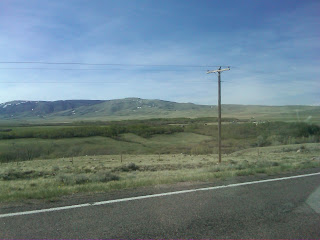
So I went for a drive out in the county, out toward the mountains this afternoon. It was beautiful day, bright sunshine, blue sky with floating clouds. The road was still closed, though, a metal cable stretched across and a sign saying the road was closed in half a mile. I will have to wait a little longer, I guess. Though I couldn't make it to where I was driving, I took in the beauty and enjoyed the countryside. It's days like this, lazy drives with stunning views, that remind me of why I love Wyoming. There is magic in the mountains, the hills, the plains, the streams, the lakes, the irrigation channels, the glens, the dells, the ranches, the public lands. You just need eyes to see. You just need to reach out with your soul and you will know, you will feel the magic in the land.




FFF,
~Muninn's Kiss
The one issue with a working site up there is that this is Wyoming, where the winters are long and cold, and the roads are impassible for nine months or more most years. So it's a summer site. I take advantage of that time as much as I can, and do other types of workings during the time I can't get to it. About this time of year, I start checking as when they open the road varies each year. The other magical site I use, for much different purposes, is real high up, near the top of a pass, and has ten feet of snow over it this time of year on a normal year and I can't usually get to it until mid July and can't get there after August or September if I'm lucky. They usually get that road open by Memorial Day (last Monday), but they predict it won't open at all this year because there's so much snow there, and what they plow during the day gets filled back in with ten feet each night, due to wind and fresh snowfall. So I'm not ever trying that site.
So I went for a drive out in the county, out toward the mountains this afternoon. It was beautiful day, bright sunshine, blue sky with floating clouds. The road was still closed, though, a metal cable stretched across and a sign saying the road was closed in half a mile. I will have to wait a little longer, I guess. Though I couldn't make it to where I was driving, I took in the beauty and enjoyed the countryside. It's days like this, lazy drives with stunning views, that remind me of why I love Wyoming. There is magic in the mountains, the hills, the plains, the streams, the lakes, the irrigation channels, the glens, the dells, the ranches, the public lands. You just need eyes to see. You just need to reach out with your soul and you will know, you will feel the magic in the land.


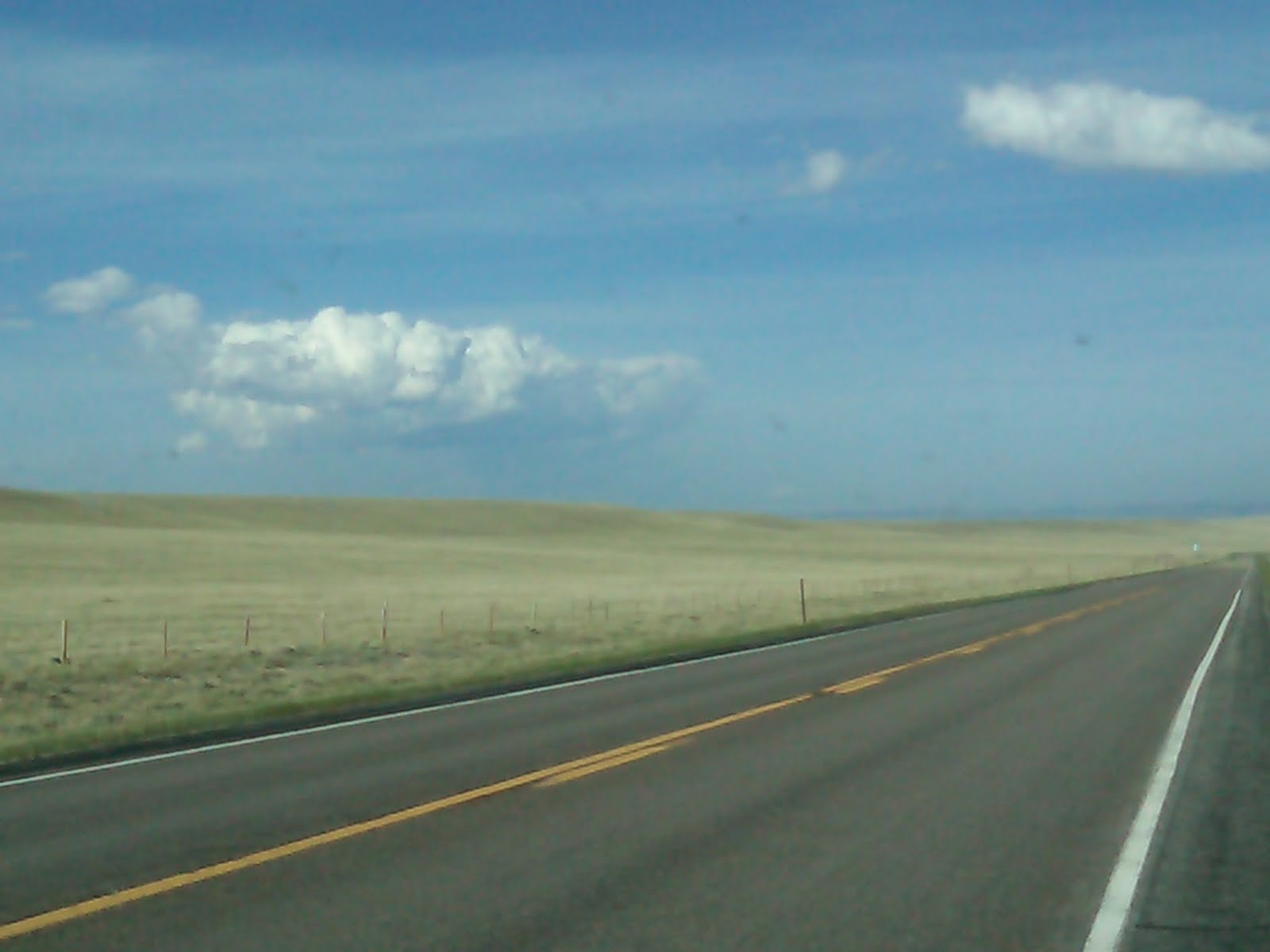


| Wyoming By Muninn's Kiss Under blue skies, stretching across the heavens, Brighter and bigger than the mind can contain. Rolling, billowing clouds float like islands, Shadows that creep across the hills. Hills and flat lands stretching and rolling, Browns and greens, sagebrush and grass. Hidden dells and meandering streams, Secrets hidden in the folds of the land. Mountains rise in purples and blues, Snow filled gullies and rocky peaks. So tall and so huge when standing among them, The huge sky and plains make them seems small. Aspen groves, green and dense, full of life, One but many, they stand vigil around the streams. The greens so bright, the leaves swaying in the wind, Trees of healing, reaching out and touching my soul. |
FFF,
~Muninn's Kiss
Friday, 13 May 2011
Buddhism and Witchcraft, Part 1, Suffering and Desire
“The teachings of Buddha are eternal, but even then Buddha did not proclaim them to be infallible. The religion of Buddha has the capacity to change according to times, a quality which no other religion can claim to have...Now what is the basis of Buddhism? If you study carefully, you will see that Buddhism is based on reason. There is an element of flexibility inherent in it, which is not found in any other religion.”
~Bhimrao Ramji Ambedkar
~Bhimrao Ramji Ambedkar
 |
| Gautama Buddha. Image from History Simplified. |
The general story of his life is that he was born a prince. His father wanted him to be a great king and isolated him from suffering and aging. One day, he saw something, probably an old man, and realized that the sheltered life of privilege and wealth he had lived wasn’t all there was. After seeing some other things, he snuck out and went to find an end to suffering.
He lived as an ascetic, trying to completely deny the body, thinking that was the way. He withered away to almost nothing. At the lowest, he was bathing and collapsed in the river and almost drowned. He reconsidered and decided deprivation wasn’t the answer either.
Recalling a memory of watching his father as a child, he decided to try contemplation. This was the Middle Way, not privilege and wealth, and not asceticism and deprivation, but a way between them. He went and sat below a tree by a river in contemplation. After 49 days, he obtained Enlightenment.
He debated whether he should teach others the way to Enlightenment or not. He finally decided to teach and spent the rest of his life teaching.
Monday, 9 May 2011
Innocence: the King and the Land are one!
"How beautiful is the black, lascivious purity of small children and wild animals." ~An African proverb as told by Victor Anderson
 |
| "The Black Heart of Feri" by Storm Faerwolf from his website. |
http://heartssdesire.livejournal.com/168563.htmlIn her post,
http://miniver.blogspot.com/2006/08/blackest-hearts-in-all-of-christendom.html
![[info]](https://lh3.googleusercontent.com/blogger_img_proxy/AEn0k_tDKDEjvN-R_t66anOwlMC-WOkwDauVxcrBkG8al1bmb-8ZaCGnJDm-j5gZKooROVpiuxk_Y1DiRVXbrpHr-K8MJRa8TG6k5Y7lyfTPexLiHlpwf1GE=s0-d) heartssdesire says the following:
heartssdesire says the following:Rather, I began to think, the Black Heart is the state of awakening fully to one's authentic self - it means one steps up to take the helm of one's own ship. It means being ruled by no one other than one's authentic self, being self-mastered. It means throwing off the masks and shackles of coercion, manipulation, or deceit so that one can by guided by the deep wisdom of innocence.This makes me think of a Feri proverb that I'm told comes from Victor Anderson:
“Never submit your life force to anything or anyone for any reason.”This very much is taking the helm of our own ship, being "self-mastered".
It's what T. Thorn Coyle calls being "self-possessed".
Sunday, 8 May 2011
"I am the queen: of every hive"
"Holy Mother, in Whom we live, move and have our being, from You all things emerge and unto You all things return." ~Victor Anderson
 |
| Mary the Virgin Mother of God. Image from Cyberbrethren blog. |
Friday, 6 May 2011
May’s First Crescent
 |
Priestess card in |
May’s First Crescent
By Muninn’s Kiss
A clouded sky, a shadowed night,
With springtime in the air.
Through the clouds, the crescent peeks,
A sliver in the sky.
Nimue’s seen, beneath the skirts,
Peeking out at us.
Slowly stepping, out to us,
From her Mother’s sacred skirts.
Selene’s crown, the priestess card,
A crown upon her head.
A crescent moon, just a peek,
Hanging in the sky.
Horns up turned, through the clouds,
Her light it lights them up.
A gentle glow, an eerie light,
Upon the darkened clouds.
The moon reborn, Celeste raised,
From the Dark Moon’s silent grave.
Luna grows, from new to full,
A sliver now we see.
Isis stands, before us now,
Rising with the moon.
A crescent moon, upon her brow,
The new born baby in her lap.
Spring has come, the fresh moon too,
New life comes to us.
Growing forth, from Winter’s grasp,
Like the crescent moon above.
Subscribe to:
Posts (Atom)