Wednesday, 12 September 2012

Taboos and Geases: Before you can advance, you must first withdraw...


Learning T'ai Chi Chuan, I learned a valuable lesson about the often misunderstood Yin and Yang.

I understood them on an intellectual level, from my study of Taoism and Traditional Chinese Medicine.  I knew not to think of Western dualism, the product of Zoroastrian influence.  I've talked before of the descriptions in The Web That Has No Weaver by Ted J. Kaptchuk.  His five descriptions greatly helped me understand Yin and Yang:
  • All things have two facets: a Yin aspect and a Yang aspect.
  • Any Yin or Yang aspect can be further divided into Yin and Yang.
  • Yin and Yang mutually create each other.
  • Yin and Yang control each other.
  • Yin and Yang transform into each other.
These principles describe a concept foreign to most Westerners.  The poetic understanding of the two is a hill on a sunny day, with no other hills or trees or mountains to cast shadows.  Before Dawn, the hill is all in darkness, is all shadow, is all Yin.  As the sun rises in the morning, it hits the Eastern side of the hill.  This is Yang.  The Western side is still in shadow, still Yin.  As the sun rises, the Yang part grows and the Yin shrinks.  Yin transforms into Yang.  by noon, the entire hill is sunny, all Yang, no shadow, no Yin.  But this doesn't last long.  As the sun moves West, the Eastern edge darkens, shadow forms at the base, Yin, then grows as the sunny section shrinks.  Yang transforms into Yin.  As Dusk fades, it is all Yin again.  Yet it's all one hill.  The hill doesn't change, only the ever changing light.  It is Yin changing to Yang, changing to Yin again.  But it's all one, the Tao.

Easy to understand intellectually and to observe, but what does it mean personally, how does it effect me and you specifically, beyond the intellect?  This is what T'ai Chi Chuang taught me.

T'ai Chi is the tent with a ridgepole, with form.  It is always moving, constant movement, constant change.  What changes, though, from what to what?  The forms change, our body, constantly in motion, moving, moving Chi, energy.  It changes, like the light, from Yin to Yang, to Yin, to Yang, and so on.  But what does this mean?  Have you ever tried to move without preparation?  Can you hit without pulling back your fist and have any force?  Can you step without first lifting your foot?  In T'ai Chi Chuan, Yin is pulling inward toward your centre, toward your lower Don Tian, preparation.  Yang is moving outward, away from your centre.  You learn quickly that before you can advance, you must first withdraw, and advancing puts you in the right position to be able to withdraw again to prepare for the next advance.  Yin transforms into Yang then back to Yin again.

That idea of advancing and withdrawing is visible in the Sepheroth of the Tree of Life in Kabbalah.  The two outer Pillars, the Pillar of Mercy and the Pillar of Severity, are named for the middle Sepherah of each side.  The Pillar of Mercy is the Pillar of Chesed, of mercy and loving kindness and forgiveness.  The Pillar of Severity is the Pillar of Geburah, of severity and justice and judgment.  Ultimately, in a base and stripped to the core manner, Chewed is infinite, unlimited expansion.  Geburah is infinite, unlimited restriction.  Geburah is Law, Chesed is Liberty.  Geburah is Yin, withdrawing, pulling inward; Chesed is Yang, advancement, moving outward.

Ultimately, Law (Geburah/Yin) takes one of two forms: a taboo or a gease.  A negative law or a positive law.  A taboo is negative in the sense that it says no, "thou shalt not", it's restrictive.  A gease is positive in the sense that it says yes, "Thou shalt", it's proscriptive.  But both are Law, and both are Yin, bring withdrawal.

At the scale of a large society like most modern societies, and the scale of large organized, taboos and geases are used to control and to prevent people from finding the power and strength and mystic connection that might make them a challenge to that established structure.  This is an extreme use of Law, of Geburah.  This is the legalism so common in organized religion, and the totalitarian tendencies of most government.  The more anarchic elements of society tend toward the other side.  The complete ignoring and breaking of taboos and geases just out of principle.  The "don't tell *me* what to do!" attitude.  They assume all rules are wrong and made to be broken.  Of course, only a few take this to it's complete extreme and break all rules including murder of random people and suicide.  The elimination of all rules, of all Law, is what Chesed as government would be, all is forgiven, all is allowed.

On a smaller scale, the extremes fall away.  Or do in the right context.  A tradition or teacher that operates fully in Chesed tends to become too "fluffy".  The lack of Law tends to lead to a lack of structure and boundaries.  This can make learning from the tradition or teacher very difficult.  On the other extreme, a tradition or teacher that operates fully in Geburah, all Law with no Liberty, where everything that is not forbidden by taboo is dictated by gease.  The lack of Liberty tends to keep all students following the same path, which makes it easier to make sure the right things are learner, but it also stifles creativity and self discovery.

I think the best approach is a balance, more Tipherah, Beauty, than Chesed or Geburah.  The balance between Law and Liberty, Love, leads to Knowledge and Wisdom.  That balance leads to Da'ath, Knowing, to Binah, Understanding, to Chokmah, Wisdom, and on the Divine in Kether,  the Crown.

In this balanced approach, taboos and geases serve three important functions and should not be lightly broken:
  1. They serve as a guideline to keep the group or student all pointed in the same direction. Taboos serve as a map as it were for the path the group is walking or the teacher is leading the student.  This is similar to the use in the Law approach, but less firm, allowing flexibility, a map instead of a wall.

  2. They can serve to protect the student or person new to the tradition. There are very real dangers in any path worth taking, and if you are not prepared, those dangers may cause damage that cannot be undone, physical, emotional, mental damage, or create a road block that prevents them from going forward.  This gives a safety net and buffer as the student moves forward and develops the tools, the skills, the defenses, the weapons to face those dangers and truly to be tried by them.

  3. They create a contrast for later transgression. You need to sometimes learn the rule and learn to follow it before you learn when to break it. And there lies Wisdom and when you've moved past basics, when you can recognize when to break the taboos, and why.  This is ultimately the process of learning when to ask questions and learning to ask the right question.  And finally, to actually ask that question.
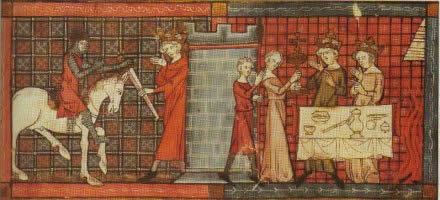
This can be seen in Conte del Graal by Chrétien de Troyes, the oldest Graal story we have.  Percival, found wandering in the woods by the woman who chose then to raise him, is enamoured with the knights of King Arthur he sees.  He sets off to become a knight.  Lord Gornemant meets him and looking kindly on him, trains him in the basics, knights him, and sends him on the way, on his own path.  This teacher, this mentor, as he was leaving, made a final statement, a taboo in some ways, a gease in others.  "Qui trop parole, pechié fait."  "Who talks too much, commits a sin."  This statement, though not phrased as either, implies both a taboo and a gease.  The taboo, of course, is, "avoid excessive speech."  The guessed is, "be silent unless it is necessary to do otherwise."

Necessity.  Learning that is Wisdom.  As Robert Cochrane said, "Do not do what you desire, do what is necessary."  Following the taboos and geases is learning the first half, "do not do what you desire".  But that is only half the lesson.  Learning when to break those taboos and geases is learning the second half, "do what is necessary".

Percival learned the first lessen well we see as the story progresses.  There's a set of principles that many trad craft witches I know tote as almost a central Law of Magic.  It is called the Four Powers of the Sphinx.  "To Know, to Will, to Dare, to Keep Silent."  These Powers are found primarily in the writings of Eliphas Lévi and Aleister Crowley, with no real mention before them.  Most people I see quoting them focus on the last, "to be Silent", the very command Gornemant gave Percival.  The context is often either oaths made in relation to initiations (it should be noted that being knighted, as Gornemant did to Percival, is initiation), or in discussions of speaking of your magical practice being giving your power away, that speaking of it is sharing power and therefore diminishing that power.  There is truth in this, but I think we should look more at Lévi's discussion as it is the foundation of later discussion.  He says several things in the Great Secret and Transcendental Magick that should enter the discussion.
"To attain such an achievement it is necessary to KNOW what has to be done, to WILL what is required, to DARE what must be attempted and to KEEP SILENT with discernment."  "When one does not know, one should will to learn.  To the extent that one does not know it is foolhardy to dare, but it is always well to keep silent."  "In order to DARE we must KNOW; in order to WILL, we must DARE; we must WILL to possess empire and to reign we must BE SILENT."
There's a lot in those quotes demanding discussion, but we'll focus on what's relevant to this discussion of taboos and geases.  In the first quote, the phrase "with discernment" sticks out.  Lévi isn't talking about blindly being silent, he's talking about having discernment about when to speak.  As Cochrane said, "I was taught by an old woman who remembered the great meetings - and she took no terrible oath from me, but just an understanding that I would be discreet. She did not require silence, only a description of what I had seen and what I had heard and said when I was admitted. The Gods are truly wise - they know the future as well as the past and they admit not those who would abuse knowledge or wisdom."  This is what Percival needed to learn, as do we.

In the second quote, Lévi is discussing when you're working from a point of partial knowledge.  When you don't know, no matter where you are in the path, you become a beginner again.  In this situation, of course silence is best.  You learn more at that stage from listening than from talking, and until you know enough to ask the right question, to know and dare to speak, you might prevent yourself from learning what you need to know to be able to dare.  Leaving Gornemant, this was where Percival was at.  He didn't know enough to ask yet, so the gease of silence was best.

The last quote gives an order.  First you must know, then you can dare, then you can will.  Will gives you dominion, but silence keeps it.  We're seeing a cycle here.  In the beginning, you are silent until you know enough to ask the right question.  Then you ask and learn more.  But when your knowledge is complete, when you have fully dared and fully willed, you return to silence.  This is discernment, knowing when to ask and when to be silent.  When to keep the taboo against speaking and the gease to be silent, and when to break them and ask.

So, back to Percival.  Percival eventually came upon the Fisher King in his boat on the river, then to the Graal Castle.  There he feasted with the Fisher King.  While he was there, he received a sword, he saw the Graal carried through by a maiden, with two pages with candelabras ahead and a second maiden with a carving dish behind, and he saw a lance that bled.  He kept silent, remembering Gornemant's gease and taboo, and didn't ask about these things.  He stayed the night, and the castle was empty in the morning, so he left, hoping to find the servants of the castle.

Instead, he finds his cousin.  She asked him what he saw in the castle and he describes it, answering each of her questions until she asks if he asked the meaning.  The conversation shows he knew enough to ask but kept silent.  She tells him his question could have healed to King and his silence brought desolation the land.

He proceeds to King Arthur's court.  A horribly ugly maiden came and chewed him out:
"Ah, Perceval, Fortune is bald behind, but has a forelock in front. A curse on him who greets or wishes you well, for you did not seize Fortune when you met her. You entered the dwelling of the Fisher King; you saw the lance which bleeds. Was it so painful to open your mouth that you could not ask why the drop of blood sprang from the whim point of the lance? When you saw the grail, you did not inquire who was the rich man whom one served with it. Most unfortunate is he who when the weather is fairer than usual waits fir even fairer to come. It was you, unfortunate man, who saw that the time and the place were right for speech, and yet remained mute. You had ample opportunity, but in an evil hour you kept silent. If you had asked, the rich King, who is now sore troubled, would have been wholly cured of his wound and would have held his land in peace--land which he will never hold again. Do you know what will happen if the King does not hold his land and is not healed of his wound? Ladies will lose their husbands, lands will be laid waste, maidens, helpless, will remain orphans, and many knights will die. All these calamities will befall because of you!" ~The Grail: From Celtic Myth to Christian Symbol, Roger Sherman Loomis, Pg, 40
"...for you did not seize Fortune when you met her."  This brings to mind something else Cochrane said, "In fate, and the overcoming of fate is the true Graal, for from this inspiration comes, and death is defeated."  "Overcoming of fate" would appear to be the same statement, "seize Fortune", as Dame Fortune was the guise Fate took in the Middle Ages, when Comte del Graal was written.  Percival failed to "seize Fortune", failed to "overcome Fate" when he failed to ask about the things he saw, in effect failed to ask about the Graal.  Cochrane said the true Graal was fate and the overcoming of fate, and the maiden says failing to ask the question was failing to grasp Fortune.  It follows that Fortune, which is Fate, and therefore the true Graal, is obtained by asking the right question, asking the meaning of the Graal.  You obtain the Graal by asking its meaning and whom it serves.

Percival failed to ask.  He kept the gease and the taboo, and therefore failed to ask the question, failed to grasp Fortune, failed to overcome fate, failed to obtain the Graal.  The secret lies in learning when to break the gease and taboo.  And in general, the secret to Mystery, to Knowing, Understanding, and Wisdom.  To Kether and the Divine.

FFF,
~Muninn's Kiss

Wednesday, 5 September 2012

Those Who Pray, Those Who Fight, Those Who Work: Musings About Labor Day


Yesterday was Labor Day in the US, in a lot of ways the Twin of Memorial Day.  Labor Day is the first Monday of September and Memorial Day the last Monday of May.  If you consider March, April, and May as Spring, June, July, and August as Summer, and September, October, and November as Autumn, Labor Day and Memorial Day mirror each other, exactly thirteen weeks apart, a quarter of a year.

But it's not the date that makes them Twins, that ties them together, but their nature.  There's two parts to this, the original intention, and the organic evolution.

Though it has evolved, Memorial Day is and always has been, throughout its history, a day of remembering those who died serving in the United States armed forces.  It is ultimately a day of mourning for the fallen, characterized by visiting graves and laying flowers and other offerings on the graves.  It has evolved in that people don't only visit military dead, but family as well in a lot of cases.  It has become almost the US's Dia de los Muertos.

Unlike Memorial Day, Labor Day is a celebration, not mourning.  It was a day created to honour the contributions of workers to the economy and society.  However, seldom is that element mentioned at this point.  It is seen as a reward for laborers, giving them a day off, laborers used to mean all those who have jobs, though I don't think management and others that aren't laborers in the traditional sense.  It is normally celebrated with picnics and barbecues, the last weekend of the summer season.  It is celebrated with family.

You have several levels, as I said, that make these two holidays Twins.  The first is obvious.  Memorial Day is a day for the military, Labor Day is a day for civilians.  This has been a strong dichotomy throughout history, with the addition of a third group, which I will get to in a moment.  Rome had a strong division between the civilians and the soldiers.  Civilians where pretty much set in their place unless they became soldiers.  You were either a citizen by birth, or you became one serving as a soldier.  There were other groups as well, but these were the largest two.  Medieval thought described the three estates, Oratores, "those who pray", Bellatores, "those who fight", and Laboratores, "those who work".  A simplified summary of India's caste system has four main castes, with the outcasts as a fifth.  These are: Brahman, "priests", Kshatriyas, "warriors", Vaishyas, "traders", Shudras, "workmen", and Panchama, "the fifth".  Traders are of not, because as the Borges developed in Europe into a Middle Class, it was traders that they were.  But priests and traders are smaller portions of society, by their nature.  Fighters and laborers are the largest portions in all societies that have try classes or castes.  And they are very much opposites in their nature, but both essential for society.

On a deeper level, the two holidays represent life and death.  Memorial Day is a day of mourning the dead.  Labor Day is a celebration of life.  Memorial Day is visiting the dead.  Labor Day is spending time with family, the place our life came from.  Life and Death.  What is curious, these days, opposite on the calender and opposite in nature, are opposite of the older holidays, holy days.  Spring is normally a time of rebirth and life, Candlemas and May Day, the length of days growing.  Autumn is normally a time of death, harvest, Samhain.  But these two are opposite that.  Why?

If you think about Labor Day from an agricultural point of view, you realize Labor Day is during harvest time, and in many parts of the US, the end of harvest.  It's appropriate that laborer's would be celebrated after harvest, after the hard work they have done.  So Labor Day is easy to see as a traditional harvest festival, especially with the focus on the family gathering around food.  And the food from harvest, though often seen as dying, is the life that gets people through the winter.

But what about Memorial Day?  It's important to note that the current Memorial Day comes from the Northern date after the Civil War.  The Southern equivalant occurred on May 1, May Day.  The secret here comes from a detail of the ceremony of visiting the graves.  The practice of laying flowers on the graves.  This practice is very ancient and didn't start with the holiday.  The holiday determined a specific day for an older custom.  Now May is well known as the month flowers bloom (though it's not as set as customs imply).  May Day is most commonly celebrated with gathering and giving of flowers.  Flowers on graves probably came from creating a place for the dead that was like where they would go in death, in the belief it would make that place better.  Just like the Egyptians filling tomes with what the dead would need.  So, if the intended custom was the placement of flowers (and the original name was Decoration Day because of this custom), it only makes sense that it would need to be at a time when flowers bloom.  Suddenly, Memorial Day becomes a flower ceremony, the placing of flowers on graves becomes a ceremony of planting, just as the body placed in the ground is the seed, the death that will bring life.

So the two Twins do in fact fit their seasons.  Memorial Day, a day of death, is a day of planting.  Labor Day, a day of life, is a day of harvest.

To get back to Labor Day specifically, lets look at labour itself.  In Kabbalah, this is Olam HaAssaiah, the World of Action.  It's the world where things happen.  It isn't the World of Planning or the World of thinking.  It's the World of Action.  Priests in most cultures deal with spiritual things.  They are the ones who pray, not the ones who act.  Traders typically take the things made by laborers and transport them then trade them with others.  They distribute the result of others actions, don't act themselves in the way we're discussing.  But both laborers and warriors act and change the world, laborers typically by creating and building, warriors by killing and destroying.  Ultimately, labour is action, and action is the stuff of this world and the only way to change the higher worlds.  This is why down to earth, salt of the earth, people are the ones who labour, the farmers and ranchers that produce our food, the construction workers that produce our shelter and roads, the steel workers building skeletons of our cities and the cars we drive, the miners and droppers and rig workers who give us energy for our electronics and our heat, that provide the iron and copper, the lumberjacks that provide the wood for our houses, the teamsters who get our things from one place to another.

Part of the reason the craft has always been made up of outsiders is because we span the classes and castes above.  We work.  You can't be a witch if you don't do the work.  We trade.  On multiple levels.  On a mundane level, most magical services were bartered and traded for.  A charm in exchange for food, a curse in exchange for repairing my fence, an amulet for a bushel of wood.  On a spiritual level, much of magic is trade with the spirits, giving them something in exchange for a service or information from them.  Witches tend to be excellent traders.  We fight.  As Victor Anderson said, the craft is martial and a warrior tradition.  It's not coincidence that many folk tales are about witches flying to fight spirits in the night.  As Cochrane said, "What I have, I hold!"  What can you hold if you don't fight for it?  And we pray.  All spells are truly prayers, but more specifically, we are Priests and Priestesses.  We form the Bridge between the people and the gods, between the Kingdom and the King, between the mundane and the Divine, between this world and the otherworld, between heaven and earth, between this world and the underworld, between life and death.  We are the Bridge because we stand between worlds.  We are liminal, neither here nor there, but both, so can connect the worlds for others.  We are Priests, Warriors, Traders, Workers.  We are all things.  Liminal.  So we become the Fifth, the untouchables.  Because we can't be contained in category because we claim them all.  So we become outsiders, Other, Monster, untouchable.

FFF,
~Muninn's Kiss

Monday, 3 September 2012

Traps, Barbed Wire, and Rails: Iron in Wyoming and the Craft


I've discussed iron a lot on lists and with friends about iron, both in folklore and in practice. I've always looked at it from a theoretical and scientific viewpoint, looking at the physical properties and what they can tell us about the use of iron in folk practice and folk tales. Most of my emphases has been on the magnetic properties and the conductive properties, and what these might have meant to ancient peoples and what they might mean now. This is, of course, a legitimate line of reasoning, and has direct practical application.

However, recently I've been looking more at my current Landscape and how various elements of folklore and practice relate to where I'm at. I began thinking of iron in that context, and got a much different picture. I think this picture is very important to my practice, and might help others investigate their own Landscape and practice.

Today in the US, in a lot of ways, steel workers are the masons of our world. Steel and iron form the bones of the great cities, and cities are more steel and concrete than anything. In more rural areas like Wyoming, though, you don't find many iron structures. But iron is no less important.

I will start with a brief history of iron in Wyoming, for without iron, there would be no present day Wyoming. Throughout this post, keep in mind that when I use the term "iron", I am including steel as well. In some cases, one would be more appropriate than the other, but I will use "iron" everywhere, unless the distinction is important.

Iron use was first introduced into what is now Wyoming by fur trappers. Beavers were very plentiful in many areas of Wyoming. To begin with, French fur trappers worked various areas of Wyoming, which was mostly in land claimed by France. Soon after, with the Louisiana Purchase, United States fur trappers moved in. Though there are other uses, during the fur trade period, the main uses of iron were for guns, knives, and traps. All three are significant, both to history, and to our purposes. A gun, of course, served two purposes, both connected to death. The killing of animals, for food and for self defense, and the killing of people, both offensively and defensively. The knife was also used for these, but more for skinning and cutting meat. Skinning is of course important when you're livelihood is the pelts of animals, and it also allows you access to meat underneath on game animals. And traps, of course, are for catching the beaver for its fur. This was not humane live traps, this was the type that closed on a leg, usually breaking it, and doing enough damage that the leg was lost even if the animal got free. The goal wasn't capture, the goal was obtaining a pelt. A trap, too, is an agent of death, like the gun. The fur trade led to settlement and military present to protect the trade routes and settlers from attacks by "Indians". Iron tack and iron horse shoes on the military horses is important, but the military presence mostly meant more guns and knives, from an iron perspective. Iron smiths were present both to cater to the trappers and traders, and for the military. The fur trade in Wyoming lasted about fifty years, until beaver hats went out of fashion in Europe.

The next major event was the gold rush, starting at South Pass. Gold was discovered in 1842, but the rush didn't pick up for another twenty years because of the Civil War. About the same time as gold was discovered, migration on the Oregon Trail trough Wyoming picked up. This meant iron rims on wagons and more iron shoes on horses, and meant more iron smiths. Some of the settlers didn't make it across Wyoming before winter and were stuck here. Those that survived the first winter often stayed and settled. Settlers of course brought iron axes, knifes, and guns. It's important to note that while South Pass City and the other gold towns nearby are now ghost towns, that South Pass City was larger than Cheyenne at one point, and there was a push to move the capital there. The gold rush had a huge impact on Wyoming, economically, politically, socially, culturally, and on deeper levels. The rush itself didn't last long, only a few years, but it resulted in a large increase in population, and made way for later mining and mineral related ventures. To this day, minerals are the state's largest source of income, including oil, natural gas, coal, uranium, natrona, and other substances. Iron in gold mining took several forms. True mining meant iron picks and shovels. Gold panning meant iron pans. With settlement and mining, iron moved from an instrument of death and preparation of the dead to tools to shape the land and gather from it. Iron rims meant long distance travel. Shovels and picks and axes meant the gathering of mineral and wood.

In the 1860s, iron took on a new role.  This began with the Pony Express in 1860.  While iron was used in tack and other things relating to the Express, the important role was iron horseshoes.  While not new in that time, the speed and constant movement of the Express would have been impossible without horseshoes, and horseshoes without iron.  Iron made the fast communication of the Express possible.  Eighteen months later, the Express was made obsolete by the second part of this new role.  The first transcontinental telegraph lines were iron and ran through Wyoming.  Iron became the the instrument for communication.  When telegraphs were later made mostly obsolete by the telephone, however, copper lines were used instead of iron.  Iron telegraph lines are still used along the railroads of Wyoming.

The first recorded cattle drive in Wyoming was in 1866. From then, the ranch industry grew exponentially. Even today, agriculture is the third largest industry after minerals and tourism. In the early days of ranching, Wyoming was completely open range. Cattle barons and sheepherders vied for the same areas, resulting in armed conflicts and slaughtering of the animals of the Other by both sides. In addition, when homesteaders began to settle in Wyoming, cattle barons took this as the settlers taking their land, and it wasn't unknown for drummed up charges of cattle rustling to result in hangings of those settlers. The problem grew until a raid in 1909 resulted in seven convictions and five imprisonments of cattlemen. In addition, the Taylor Grazing Act helped to define where grazing was allowed and create regulations to control grazing land to avoid conflict. One of the main issues in Wyoming besides water and mineral rights has always been open range and at large animals and how that interacts with private land. There are two main parts to Wyoming law involving this, branding and fencing. Brands were originally controlled by county but was taken over by the state in 1909. A brand is a symbol burnt into an animal using a hot iron brand, basically iron in the shape of the brand symbol that is heated and placed on flesh to leave the pattern burned into the animal. A brand is designed to prove ownership and is very hard to conceal with your own brand. The laws have since been expanded to include several other types of marks and electronical devices. Brands are essential on shared open range to make sure each rancher retrieves their animals and only their animals when bringing them back to their own ranch. Also, no livestock can cross Wyoming state or county borders without a brand inspection to verify ownership. This prevents cattle and sheep theft by taking them out of the area their brand is identifiable in. Obviously iron is very import to this process. Brand design and registration is very important, and I am working on an article about symbols that will discuss them along with other types of crafted symbols. The other issue is fencing. When Wyoming drafted our state constitution, it included a provision that said unless overridden by state, county, or local law, British Common Law should be followed. Open range is one of the few places that Common Law is specifically overrode at the state level. British Common Law dictates fence in. The owner of a domestic animal isresponsiblefor any damage done by that animal if it is at large, and the property owner whose property the animal is on is not responsible for any harm done to the animal. "Where my beasts, of their own wrong, without my will and knowledge, break another's close, I shall be punished, for I am the trespasser with my beasts," 12 Hen. VII, Keilway 36. Wyoming, however, is fence out unless local law overrides that. A land owner is responsible for fencing out any at large animals, and if they don't, they are responsible for any damages done by or to the animal. This also means that if you kill a domestic animal in open range land (for instance, hitting a cow with your car), you have to pay for the animal plus any damages you suffer. So, fencing your land is very important. The original law in 1869 (21 years before statehood) dictated it must be constructed with rock or wood. In 1882 and 1888, legal fences were redefined to include barbed wire, and specified how barbed wire fences had to be constructed. There's a lot more details to all this, and the laws, rulings, and practices the laws and rulings imply are far more complicated, but for our purposes here, the point is that iron is used for most branding and most fencing in private rural areas of Wyoming. And very little of the private land in Wyoming is not rural.

The fifth major event that changed Wyoming was the railroad.  The first transcontinental railroad, completed in 1869, like the first telegraph, was built across Wyoming.  Iron tracks, iron spikes, iron engines, iron cars.  There is no railroad without iron.  The railroad effected Wyoming in many ways.  First of all, the building of it brought many many people.  For the first time, Wyoming's population swelled above five hundred thousand people.  It would only do twice more, once around 1890 when Wyoming became a state, and currently, due to the current coal boom.  The railroad also brought trade, brought money, brought goods that were impossible before, brought jobs.  Towns grew up along the tracks, Laramie, Rawlins, Rock Springs, Green River, Evanston.  And it brought the Irish and Chinese.

The sixth and final major event and its children occurred in 1913.  The Lincoln Highway, named for President Lincoln who had the first transcontinental railroad possible, was the first transcontinental improved "auto trail", the first transcontinental highway.  It roughly followed the railroad except on the western edge of the state where it diverted north.  With the highway came automobiles from the East.  Cars of steel, of iron.  Later, the first transcontinental Interstate Highway, I-80, followed it, diverting from the route of the Lincoln Highway and railroad in three sections, then following the railroad into Utah where the Lincoln Highway headed more northerly into Idaho.  These highways and the other national, state, and county highways that formed off of them in a web made automobiles, with their steel or iron frames and engines, the primary mode of transportation.

So, we have:
  • Trappers with traps, guns, and knives.
  • Miners with picks and shovels.
  • Settlers with axes, knives, and guns.
  • Military with horseshoes, swords, knives, and guns.
  • Pony Express riders with horseshoes.
  • Telegraph with telegraph lines.
  • Ranchers with brands, fences, horseshoes, knives, and guns.
  • Railroads with tracks, engines, and cars.
  • Highways with automobiles.

A few themes run strongly through these.  Death (traps, guns, swords, knives), breaking apart or tearing down (knives, picks, shovels, axes), communication (horseshoes, telegragh lines), marking (brands), boundaries (fences), trade (horse shoes, tracks, train engines, train cars, automobiles), food (guns, knives, horseshoes, brands, fences, tracks, train engines, train cars, automobiles), and transportation (horseshoes, tracks, train engines, train cars, automobiles).  These seven uses of iron built the Wyoming that's here today.

These seven things are also what are important with iron in the craft in Wyoming, because iron will resonate with these seven usages, death, separation/loosing, communication/binding, marking/naming, boundaries, trade/finances, food/sustenance/nourishment, and transportation/movement.  Though in the work, there is convergence.  Boundaries becomes separation, so loosing.  Loosing/separation/boundaries becomes banishing as well, especially with the fence out aspect.  transportation/movement, trade/finance, and communication/binding come together as binding/invoking.  Food/sustenance/nourishment becomes life.  So we end with two pairs, two Divine Twins.  Life and Death.  Loosing/banishing and binding/invoking.  Though really the second pair can be written simply loosing and binding.  But ultimately life is the binding of our Wyrd, our Fate, to this world, and Death is the loosing of the same.  So, in Wyoming, iron is either that which binds (especially brands and barbed wire) and that which looses (especially guns and axes and picks).  Binding and loosing.  Understanding why, and how to use that knowledge is the mystery and the secret.

FFF,
~Muninn's Kiss


Saturday, 1 September 2012

Exitium in initio ponebatur

This is a time for endings.  My grandma died a week ago, my great aunt a week before, another great aunt in the last few months.  On Friday, my job ended.  It is a time of endings.

(This post was begin August 26, the evening after my drandma's memorial service and the Dag after my job ended.)

All things that begin must end.  Something must end for something new to begin.  The end is present in the beginning.  The destruction is present in the creation.  Exitium in initio ponebatur.

An ending is an opportunity.  It clears the slate.  Until something ends, you are commuted to the current path.  You have to consider the consequences.  If you are working, accepting a job means quitting the old or determining how to do both.  If you are in a relationship, starting a new one requires ending the old one or facing how the new one will effect the old.  But when al job ends, you are free to accept any new ones that come.  When a relationship ends, you are free to accept any new ones that come.

Initiation of course comes from the word "initium", "to begin".  This is conjugated into "initio", "beginning".  One thing present in all forms of initiation is death and rebirth, though the form these take varies.

The first event in my life I can truly call initiation was the ordeal and connected rituals I went through joining an order as s teenager.  There were four elements to that ordeal: a night alone in isolation, silence, physical labour, and limited food.

The night of isolation followed a ceremony, a ritual, and was a time to contemplate the mysteries I had seen.  Isolation is always a time of contemplation, especially following seeing and hearing the mysteries.  Note that after his baptism and the holy spirit coming upon him as a dove, a very obvious initiation, the holy spirit drove Jesus out into the desert, the Eremus, the Wasteland, to be tempted.  Following the initiation he received, following things he had seen that were mystery and new, he spent forty days in isolation, alone, and the temptation only came at the end.  Also note in the Graal myths, the Graal Knight, after failing to ask the questions that would heal the King and with him the Land, spends years in the Wasteland in isolation, a self imposed excile, during which he contemplates the things he saw and the questions he didn't ask.  Isolation is the Wasteland.

The second element was silence.  I was under oath not to speak the entire ordeal.  This also reflects the Graal myth, especially the earliest, where the knight that trained Sir Perceval instructs him to listen more and talk less, which leads him to not ask the questions.  This silence, and the events that follow it, leads to the Wasteland, and the Quest (to ask, to seek) for the answers to the unasked questions.  Silence is the Catalyst.

Third was labour.  During the day between the night alone and the final ceremony, the actual initiation, I performed manual labour, honest labour, service.  This is also seen in the Graal myth, for in the Wasteland, the Graal Knight does service, rescuing those in danger, protecting those threatened, feeding those who are hungry, helping those in need.  You see the same thing from Jesus between Initiation and Death.  This is selfless service.  This is changing Wyrd to help others, binding and loosing the Threads of Fate.  Overcoming Fate for others.  Labour is the Overcoming.

Fourth was limited food, denying the body.  With Jesus, we see this as the fasting for forty days in the Wasteland.  For the Graal Knight, we see this in the oath he takes before heading on the Quest, to not sleep two nights in the same place, to avoid strange tales, to engage in combat any knight claiming to be better than another or any two nights claiming the same.  The denial here is of course denial of a home, denial of fancy, and denial of safety.  Denial is the Suffering.

These elements of course are all present in such initiations as spending the night in the Devil's Chair.  The Catalyst is that which calls you to do so, to make the trip, to take the risk.  The Suffering is fasting and staying awake all night, denial of food and sleep.  The Wasteland is your isolation up there, no one to help you, no one to comfort you.  And the Overcoming is the result.  You will return mad, dead, or a poet.  The poet overcame.

This ordeal, Catalyst, Suffering, Wasteland, and Overcoming is the process in Initiation of Death and Rebirth.  The old dies in the Wasteland, to be reborn in the Overcoming, which is in fact Nexus, the coming back together, the Divine Twin of the Catalyst which begins the process of breaking apart.

We go through this process with the death of a loved one, though it's not as clear.  In effect, in our mourning and sorrow, we die with them, and are reborn from that sorrow.  Their dying is Catalyst, making use experience death, look at ourselves, begin the sorrow and grieving process.  Our fear and sorrow, grief and pain are Suffering and the Wasteland.  We must Overcome to be able to move on, to live again.  We are reborn from the smashes of our sorrow and grief.  Changed, yet moving on.

Losing a job is the same.  The point of layoff or firing is the Catalyst, loosing the Threads that held us to the old job, unbinding the bonds that held us there.  The job hunting process is Suffering and Wasteland, Suffering being the sacrifices made to get through that time, eating as cheap as possible, not giving in to our desires, because money is short.  The Wasteland is that time of isolation when we have no job, no income, no boss, no coworkers.  We are the wounded Fisher King, no longer able to do what we once could.  We are the slain knight, beheaded in the act of losing our job.  But most of all, we are the Graal Knight, on a Quest for the answer to, "what is the meaning of these things?"  The Overcoming, of course, is a new job at the end of the Wasteland, Nexus, the coming back together of the frayed Threads, ragged in the Wind of the Wasteland, the anchoring back down of our lives.  Changed yet moving on.

"Behold, the old has passed away and all things have been made new."

All things that begin must end.  Something must end for something new to begin.  The end is present in the beginning.  The destruction is present in the creation.  Exitium in initio ponebatur.

FFF,
~Muninn's Kiss

Friday, 31 August 2012

Blue Moon Rising


Tomorrow is a full moon. Full and dark moons are always significant, but this one has a special signification. It is considered a blue moon. In this context, a blue moon is a second full moon within a month. It comes about because our months (despite the name which really means a moon period) are based on a solar year, which just over a week longer than twelve moon cycles (eleven days longer). Every few years, the moons land such that thirteen full moons occur within a solar year (and in between, thirteen dark or new moons occur). The extra moon in whichever month it occurs forms a second full moon within a solar month, a blue moon. Any rare event tends to have more power than common events, like a lunar eclipse has more power than a normal full moon, even though it occurs on a full moon, and a full solar eclipse is much more powerful than other dark moons.


How a blue moon is used, of course, depends a lot on how you practice. My practice focuses more on dark moons than full, though full are important, as the mid point of a lunar month (I determine moons as dark to dark), so the energetic high tide of the moon. Most important to my practice is that this is the full moon directly between the full moon closest to the cross quarter (Lugh's Day) and the one closest to the Autumn Equinox. Most years, that would make this the mid point of the first moon of Autumn, but this year it is the midpoint of the second moon, making it the mid point of Autumn. I suspect the shift and the occurrence of a blue moon are not unconnected or coincidence.


Typically, full moons are times of fulfillment in my practice. Waxing is increase, waning is decrease. A dark moon is chthonic, the underworld, death, things secret. The full moon is the fullness of time, the birth after a pregnancy, a time to reveal and proclaim. I've never done work on one, I would think a blue moon would be a time of unexpected revelation, of revealing of things that aren't normally revealed, a time of unexpected birth, a time for sudden unexpected proclamation. If I was going to do a working, it
would be for something I wouldn't normally try for, a wish I normally would let sleep. Or proclaim unexpected Change. If it rained, I'd gather water and use it later for those same things. Same if I gathered herbs or roots or other plants, or bones and other animal products. That unexpected and abnormal aspect, I think, is very important and useful.


So I sit here wondering, is there something I should do tomorrow under the light of the blue moon?

FFF,
~Muninn's Kiss

Sunday, 19 August 2012

Salt of the Earth

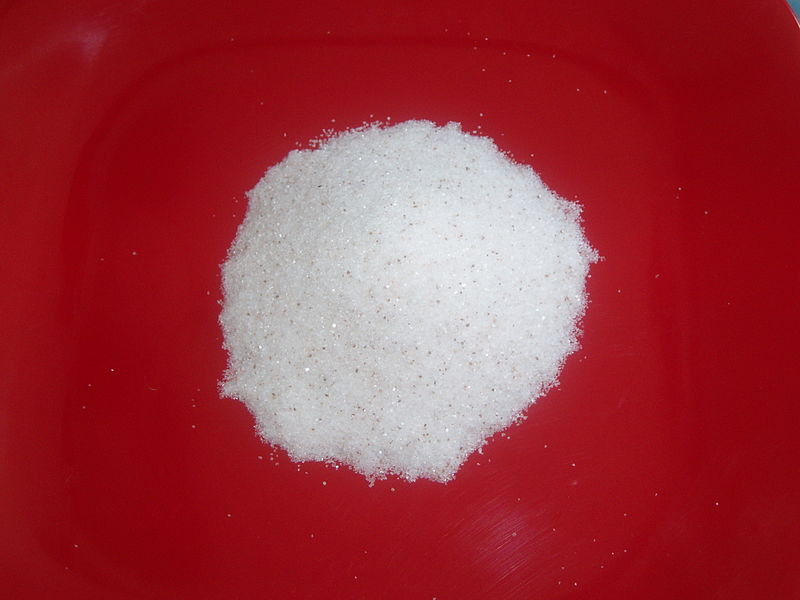
Real Salt


There is a term often used in this part of the country and other more rural areas of the US.  We describe certain people as salt of the earth.  A quick search online doesn't return this use at all, yet it is the way I've heard it used the most.  The closest I can find is a definition of "Those of great worth and reliability." (http://www.phrases.org.uk/meanings/salt-of-the-earth.html)  This appears to be the use of the phrase in the UK, and is stated as coming from Chaucer's usage in the Summoner's Tale.  Read in context, Chaucer's usage seems tongue and cheek.  The lord in the tale is sincere, using it the way the definition above describes it, but the narrator, the summoner, seems to intend it to be an insult, not at the friar in the tale, but at the friar in the party with the summoner, who had just told his tale.

The phrase comes from Matthew 5:13 in the Bible, from the Sermon on the Mount, "Ye are the salt of the earth: but if the salt have lost his savour, wherewith shall it be salted? it is thenceforth good for nothing, but to be cast out, and to be trodden under foot of men."

Lake Salt

The way we use it, while coming from the Bible verse, and being related to Chaucer's usage, has grown to indicate much more than either of these.  "Salt of the earth" doesn't just mean someone who is worthy or reliable, it implies someone whose whole life can be described that way.  It is someone who does "honest work", usually someone who works the land, like a farmer or a rancher.  This implies a hard worker.  It is someone who isn't young, though not necessarily old, who has devoted their whole life to working the land.  This implies commitment and persistence.  It is someone who is honest in every way, for whom a hand shake is binding, someone who would never cheat anyone in a deal, would lay everything out on the table, would make sure all the facts were known before accepting an offer, but also shrewd and cunning in negotiations, getting the most they can out of the deal without falsely representing anything, a good bargainer.  So, honesty, integrity, shrewdness, cunning.  Someone who keeps their word and vows, someone who will never go back on their word or cheat on their spouse, and always repays their debts to the best of their ability and accepts the consequences if somehow they can't, who would never run away for trouble and hardship. So, once again, integrity and commitment, but also humility and forthrightness.  Typically, it's used to describe a "good Christian man or woman", in terms of someone that embodies what was believed to be an ideal Christian in the early 1900s, which includes all the above qualities, plus love and hospitality and generosity.  "Down home country folk", rural, hardworking, honest folk.  Those who provide to the people of this nation the stuff of life, grains and vegetables, meat and dairy.  Family owned and operated ranches and farms.  Rising early before the dawn to get chores done and animals fed.  Large breakfasts and suppers (not lunches), and small dinners, going to bed early.  Of course, all these are stereotypes and ideals, but these are the things the term has come to represent.

As an example, when the Squirrel Creek Fire threatened many ranches about 30 miles west of Laramie, the fire fighters and other workers from out of state were shocked at the response they got.  I was not, I was shocked that it wasn't that way other places, giving them reason to be shocked.  They went to the ranches to ask them to evacuate.  Almost all agreed immediately, which surprised the people from out of state.  They said in other places, most people needed convincing.  Here, they responded with, of course.  We'll get our livestock ready and get out real quick.  Would you like some breakfast or coffee before you leave?  No?  Ok, well, once this is over, come by and have some coffee and we'll talk and you can relax.  Thanks for coming by, thanks for the work you're doing.  If you need water to fight the fire, use our water rights (which is a huge thing in the West, for those not familiar; people have died over water rights, and there is no bigger field for lawyers to specialize in that water and mineral rights).  If you need to build fire blocks, go ahead and use bulldozers on our land, we can restring fences as we need to, fighting the fire is more important.  Ranch after ranch, the same thing.  That is "salt of the earth".

So, what is salt?  Scientifically, a salt is any ionic compound that is formed from a reaction of an acid and a base that results in a neutral compound.  Not too helpful for those not already familiar with this definition.  An "ionic compound" is compound held together by ionic bonds.  An "ionic bond" is a chemical link between two atoms that is caused by an electrostatic force resulting from opposite charged ions.  Okay, keep getting deeper here.  An ion is an atom or molecule that has lost or gained one or more electrons, resulting in a positive or negative charge.  So, in an ionic bond, we have one atom that has lost an electron and another that has gained one.  Electrostatic purely means they are held together because of their charge, so we've accounted for that.  So, in a salt, what we have is an acid and a base coming together and reacting.  During the reaction an electron moves from one to the other, and the resulting unbalanced charges holds the two atoms together, resulting in a salt.

Fleur de Sel

The salt most people think of is Sodium Chloride, commonly called table salt of rock salt.  This is what people use on food, and the salt most commonly used in both folk practice and religious practice world wide.  It comes from two sources, but ultimately one.  It is obtained either from salt water (usually sea water, but also some lakes like the Dead Sea in Israel/Jordan, and the Great Salt Lake in Utah) or from rock deposits.  I say ultimately one source, because the salty water bodies are salty because of water leaching salt out of rocks and washing it down the the body, so seas and lakes get their salt from rock deposits ultimately.  Of course, salt is formed by sodium and chloride in water reacting, so the rock deposits are created by water ultimately, so chicken and the egg here.

Now, "salt of the earth" is of course an interesting phrase.  Is it referring to salt that comes from the earth, or to having the effect on the world that salt has on food?  In the Greek in the use in the Bible, it says ΤΟΑΛΑϹΤΗϹΓΗϹ (there were no spaces or punctuation in the original Greek), to halas tEs gEs.  The sigmas on the end of "hala" and "gE" purely mean they are singular nouns.  "to" mean "the" and "tEs" means "of the".  "hala" does in fact mean salt, specifically salt used to season food, salt sprinkled on sacrifices, saline fertilizers, salt shared between two people, and speech that controlled and consciously intended to be polite. "gE" is the same word we usually pronounce as Gaea.  But Gaea and gE are not the world we live *in* but the world we live on.  It's used for arable land, for ground we stand on, for land as opposed to sea, as earth as opposed to heaven (ouranos, Uranus, as in the expanse of the sky), as the inhabited earth where men and animals live, as in the land enclosed in fixed boundaries as a country.  (Interestingly, "wasteland" is eremos, meaning lonely, desolate, uninhabited, desert, wilderness, uncultivated land, deserted, and is not gE, is not Gaea, who is only the inhabited and arable regions of earth.)  The second possible sense I started with, the world as a whole, is actually usually ouranos, not gE.  So we are talking about the salt of arable, inhabited land, the salt of fertile land.

Now, back to the chemical explanation of salt, we have a reaction between two opposite forces that ends in a strong bond.  Consider the use of salt as shared between two people to show a bond between them.  This is not based on the chemical structure of salt, obviously, because it would have been unknown when the custom developed.  What would have been known?  This ritual is more than just seasoning your food, it represents an unending bond (whether in reality it is unending or not).  Why salt?

Looking at the other uses for the word, obviously not as fertilizer for already arable land, as that implies a repeated process.  So that only leaves two things in the list above, season of food, and sprinkling on sacrifices.  The second is interesting, as a sacrifice obviously isn't lasting.  It seems to imply the same ritual as sharing salt, that you sprinkle the salt on the sacrifice to share salt with the god in question, to form a lasting bond and agreement, just like with a person.  But what about seasoning food?

Season.  The English word we use to understand this use currently means "to improve the flavour of by adding spices", and has since the 1300s.  But is comes from the Old French word assaisoner, meaning "to ripen, season".  We still use that sense, though not as often, for curing meat.  This Old French word comes from the root we get the noun season from, seison or saison, meaning "to sow", from the Latin sero.  This lent the sense of the changing of the seasons. So to season meat is to let it cure for a time.  This implies seasoning food with salt not being the prinkling on for flavour but the use of salt in curing meat, to preserve it.  To make it last.

So the ritual of sharing salt to form an alliance or cement a deal and the sprinkling of salt on a sacrifice for the same reason both seem to be connected to salt's ability to preserve. It's uncertain how this ability was discovered, but salt does so through the process of absorbing the water out of bacteria and other microorganisms keeping them from interacting with the meat, hence spoiling it.  Salt absorbs.  This is the other use we see in ritual and folk magic contexts, the use of salt to absorb, either to become a carrier for what we want, or to aid in the removal of what we don't.  This absorption would have been observed along with the preservation, because they really are one and the same.

Now, once more, back to the chemical explanation.  There's a principle in folk magic across the world that applies very obviously here.  It's that the surface appearance of something reflects its inner nature, and vice versa.  So, by observing what we can see, we can identify what we can't see, and by changing what we can see, we can change what we can't see.  Salt, seen to preserve and being therefore connected to lasting bonds, does reflect this at an molecular level, for the ionic bond that holds salt together is very very strong, and it is very difficult to break it back apart again.

The absorption, however, is actually the opposite of what it seems.  Salt does not absorb anything on a chemical or physical level, it is absorbed.  What happens with curing is that the salt on the surface of the meat contains a bit of water, or, more accurately, the water on the surface contains so much salt that is is undetectable.  The way osmosis and cell membranes work is that the water in the cell flows toward this super concentrated salt water, trying to delude it.

On a spiritual or magical level, these same things apply.  Salt does preserve, and does so the same way. When used to preserve (this includes using it for protection by sprinkling it across a doorway or using it for a protective circle around you), it doesn't repel the bad things, including negative energy and curses, it draws them in.  Think of it as ultra-salty bad water.  It draws the other bad stuff to delude it down to an equal amount of salt outside and in, so it draws the negativity and curses around the salt, keeping it from you.

Same for using it to absorb.  It doesn't really absorb, it holds the thing you put with it to it, it dissolves itself in it.  And works quite well for that.

Back to the salt of the earth.  We still haven't truly defined which way this means.  Obviously, people who are salt of the earth aren't salt of the sea. But is it a description for them coming from the earth, or of them preserving and holding the earth?  Are they a product of the earth, or an agent working on the earth?

I would say both.  They do come from the earth.  These are people that have lived on and depended on the land all their lives.  Their food comes from the land, their water comes from the land, their shelter comes from the land.  They depend day in, day out on the land.  Just like their crops or their animals.  They are as much a product of the land as the livestock and produce is.

On the other hand, these are people putting their attention and intention toward the land and the weather that controls the land.   These are people pouring their energy and power into the land.  There's a song by Rich Mullins called First Family, which really shows this, and is what I think of when I think of the farmers and ranchers:
Talk about your miracles
Talk about your faith
My dad he could make things grow
Out of Indiana clay
Mom could make a gourmet meal
Out of just cornbread and beans
And they worked to give faith hands and feet
And somehow gave it wings 
What comes forth from the ground is a partnership between the earth and the salt of the earth.  The salt, like the salt discussed above, pulls life up from the earth and around them.  Osmosis.  Salt of the earth.  And this process preserves the earth, for the rancher or farmer will die with the land if the land is over worked or not treated right.  The salt and earth are one.  The farmer and the land are one.  The rancher and the land are one.  The King and the Land are one.  Kether and Malkuth.  In a very real way, it's the vitality of the farmer or rancher that keeps the Land from being the Wasteland, Gaea from being Eremos.  Just like the Fisher King.

And so who are we, as Witch?  Are we the salt of the earth?  Do we work with the Land, work with the spirits, to produce what we need and keep it and them alive, or do we enslave the Land and spirits?  Are we the salt that is saline fertilizer, or are we the salt that too much kills the land?  How do we approach our practice, as partners with the spirits or as conquerors?

FFF,
~Muninn's Kiss


Saturday, 18 August 2012

Grasping Fate: The Graal Question


Ha! Percevax, Fortune est chauve
derriers et devant chevelue.
Et dahez ait qui te salue
et qui nul bien t'ore et te prie,
que tu ne la retenis mie,
Fortune, quant tu la trovas!
Chiés le Roi Pescheor alas,
si veïs la lance qui sainne,
et si te fu lors si grant painne
d'ovrir ta boche et de parler
que tu ne poïs demander
por coi cele gote de sanc
saut par la pointe del fer blanc!
Et le graal que tu veïs,
ne demandas ne anqueïs
quel riche home l'an an servoit.
Mout est maleüreus qui voit
si bel tans que plus ne covaigne,
si atant tant que plus biax vaigne.
Ce es tu, li maleüreus,
qui veïs qu'il fu tans et leus
de parler a lui, te taüs!
En mal eür fol san eüs!
En mal eür tant te teüsses,
que, se tu demandé eüsses,
li riches rois qui si s'esmaie
fust ores gariz de sa plaie
et si tenist sa terre an pes,
dom il ne tanra point jamés.
Et sez tu qu'il an avandra
del roi qui terre ne tandra,
qui n'est de ses plaies gariz?
Dames an perdront lor mariz,
terres an seront essilliees
et puceles desconselliees,
qui orfelines remandront,
et maint chevalier an morront,
et tuit avront le mal par toi.
~Le Conte du Graal, La cour du roi Arthur, Chrétien de Troyes


Ah, Perceval, Fortune is bald behind, but has a forelock in front.  A curse on him who greets or wishes you well, for you did not seize Fortune when you met her.  You entered the dwelling of the Fisher King; you saw the lance which bleeds.  Was it so painful to open your mouth that you could not ask why the drop of blood sprang from the whim point of the lance? When you saw the grail, you did not inquire who was the rich man whom one served with it.  Most unfortunate is he who when the weather is fairer than usual waits fir even fairer to come.  It was you, unfortunate man, who saw that the time and the place were right for speech, and yet remained mute.  You had ample opportunity, but in an evil hour you kept silent.  If you had asked, the rich King, who is now sore troubled, would have been wholly cured of his wound and would have held his land in peace--land which he will never hold again.  Do you know what will happen if the King does not hold his land and is not healed of his wound?  Ladies will lose their husbands, lands will be laid waste, maidens, helpless, will remain orphans, and many knights will die.  All these calamities will befall because of you!
~The Grail: From Celtic Myth to Christian Symbol, Roger Sherman Loomis, Pg, 40


"Opportunity has hair in front, behind she is bald; if you seize her by the forelock, you may hold her; but, if she once escapes, not Jupiter himself can catch her again."
~"Dictionary of Latin Quotations, Proverbs, Maxims and Mottos," H.T. Riley, London, 1866


Some groups seek fulfillment in mystic experience - this is correct if one does not forget the duty of 'involvement' - the prime duty of the wise. It is not enough to see The Lady, it is better to serve Her and Her will by being involved in humanity, and the process of Fate (The single name of all God's is 'Fate'). In fate, and the overcoming of fate is the true Graal, for from this inspiration comes, and death is defeated. There is no fate so terrible that it cannot be overcome - whether by a literal victory gained by action and in time, or the deeper victory of spirit in the lonely battle of the self, Fate is the trial, the Castle Perilous in which we all meet to win or to die - Therefore, the People are concerned with Fate --for humanity is greater than the Gods', although not as great as the Goddess. When Man triumphs, fate stops and the Gods are defeated - so you understand the meaning of magic now. Magic and religion are aids to overcome Fate, and Fate is a cradle that rocks the infant spirit.
~Robert Cochrane's Second Letter to Joe Wilson, Twelfth Night, 1966


Who is this flower above me?
What is the work of this god?
I would know myself in all my parts.
~Feri Flower Prayer


FFF,
~Muninn's Kiss

Faerie Nation Mag